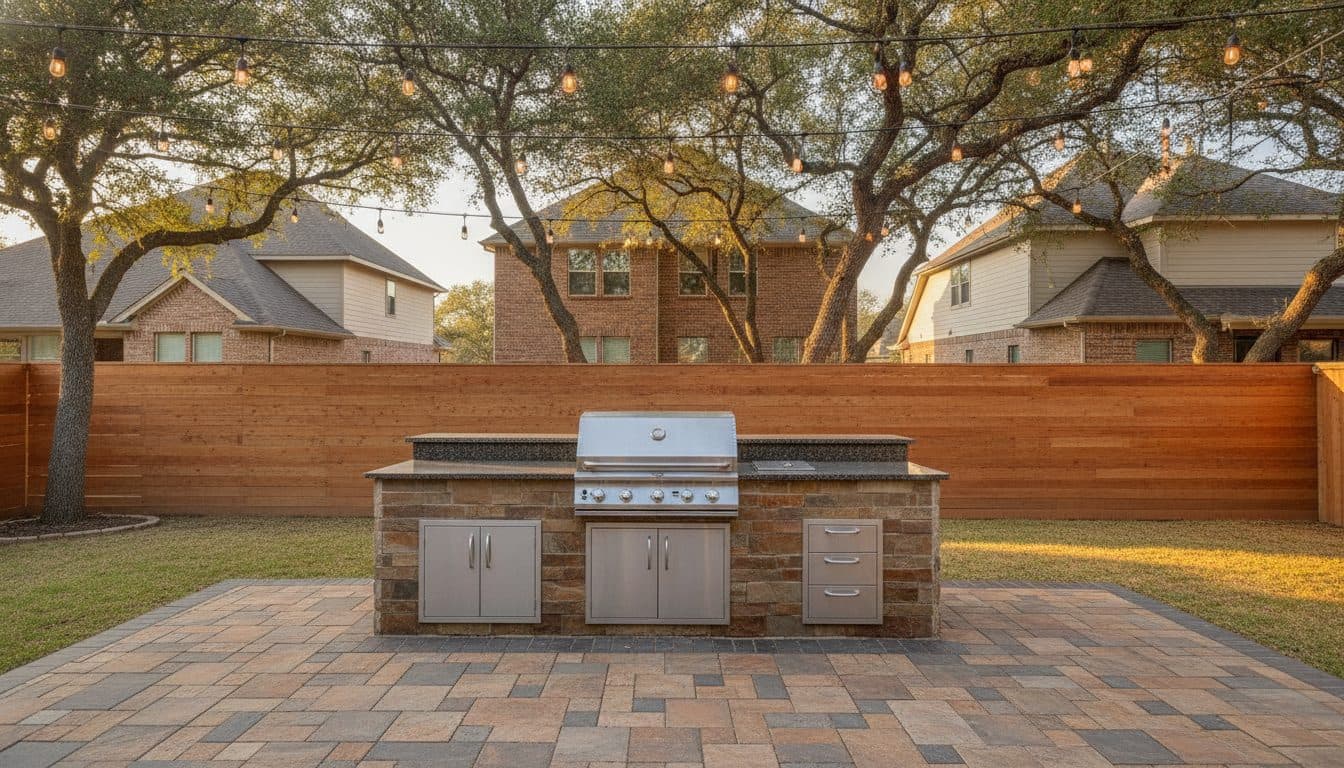
Outdoor Kitchen Cost in Central Texas (2026 Builder's Guide)
An outdoor kitchen has two very different cost sides. The construction side, meaning the island shell and the countertops, is predictable: the built island runs about $460 per linear foot of counter run, and countertops run about $100 to $145 per square foot. The equipment side, meaning the grill and the appliances, is where budgets swing wildly, from a starter package around $5,500 up to luxury brands that cost several times that.
The honest way to plan an outdoor kitchen is to lock the construction side first, then choose appliances to fit the budget that is left, and to remember that the quiet cost is the utility runs. This guide breaks down the island and counters with a worked example, keeps the appliance numbers realistic rather than inventing precise figures, and is clear about the gas, water, drain, and electrical work that decides your final number.
What actually drives outdoor-kitchen cost
Three things set the budget: the size of the island, the appliances you drop into it, and how far the utilities have to travel to reach it. The island shell is the most predictable piece, priced by the linear foot of counter run at about $460 per linear foot for the framing, masonry, and cladding. Countertops add about $100 per square foot for Lueders limestone up to about $145 per square foot for granite.
The appliances are the wild card. A basic grill-and-basics package starts around $5,500, but premium and luxury grill brands, along with side burners, refrigeration, ice makers, and pizza ovens, can multiply that several times over. Because appliance pricing varies so much by brand and selection, we treat it as an allowance you set rather than a fixed number, and we build the island to house the equipment you actually choose.
The island shell and counters: a worked example
Take a 10-foot L-shaped island. The base structure at about $460 per linear foot comes to roughly $4,600 for the shell. Countertops are figured at about 2.5 square feet per linear foot for a standard counter depth, so 10 linear feet is about 25 square feet. In Lueders limestone at about $100 per square foot that is around $2,500; in granite at about $145 per square foot it is around $3,600.
That puts the island and counters together at roughly $7,100 to $8,200 before any appliances or utility work. Add a starter appliance package from about $5,500 and the running total is roughly $12,600 to $13,700, still before the utility runs. So figure about $13,000 and up for a modest island with entry appliances, and understand that both the counter material and the appliance selection can move that meaningfully in either direction.
Appliances: where budgets swing most
Appliances are the single biggest reason two outdoor kitchens of the same size cost very differently. An entry package built around a solid grill and the basics starts around $5,500. Step into premium and luxury grill lines, and add a side burner, a built-in refrigerator, an ice maker, a vent hood, or a pizza oven, and the equipment total climbs quickly and can exceed the cost of the island itself.
Our honest advice is to set an appliance allowance you are comfortable with and design the island around it, rather than letting the equipment list creep. A well-built island will happily house an entry grill now and a premium one later, so it is reasonable to build the structure for the kitchen you want and phase the appliances if the budget calls for it. We keep the appliance figures as allowances rather than promises, because brand and model pricing moves too much to quote precisely in a guide.
The utility runs: gas, water, drain, and power
The quiet cost in every outdoor kitchen is getting the utilities to the island. A gas grill and side burner need a gas line run from the meter or a dedicated tank. A sink needs a water supply and, in most jurisdictions, a proper drain. Refrigeration, lighting, and outlets need weather-rated electrical on their own protected circuits. None of that is visible in the finished kitchen, but all of it is real work.
Distance is the multiplier. An island tucked against the house, close to existing gas, water, and electrical, is far cheaper to service than one set out in the yard that requires long trenching and runs. This is scope we quote per site rather than by a formula, because your final number depends heavily on where the kitchen sits relative to the utilities it needs. When you are choosing a location, know that moving the island closer to the house can save real money on the runs.
Central Texas factors: sun, cover, and permits
Orientation and shade shape both comfort and cost. A west-facing kitchen bakes in the afternoon, so many homeowners pair the island with a patio cover, a pergola, or a louvered roof, which is a related project worth pricing alongside the kitchen. Cladding and counter materials should be chosen to take full Texas sun without fading or cracking, which is part of why Lueders limestone and granite are common choices here.
On the paperwork side, gas, plumbing, and electrical work generally require permits and inspections, and requirements vary across the Austin and San Antonio metros. Many neighborhoods also run an HOA review for a permanent structure in the backyard. These do not add much to the headline number, but they are part of doing the job correctly, and we handle the permitting as part of the build.
How to keep the budget in line
The most effective levers are location and appliance discipline. Placing the island near the house shortens the utility runs, which is often the biggest hidden saving available. Setting a firm appliance allowance keeps the equipment list from quietly doubling the project. Choosing Lueders limestone over granite trims the counter cost while still standing up to the sun.
Beyond that, it is reasonable to build the island for the kitchen you ultimately want and phase the finishes and appliances over time, because the structure is the part that is hard to change later. We would rather help you build a shell sized correctly for the space and add to it than watch you shrink the footprint to fit today's appliance budget. The island is the bones; the appliances are the parts you can upgrade down the road.
Common questions
The construction side is predictable: the island shell runs about $460 per linear foot and countertops about $100 to $145 per square foot. A modest 10-foot island with counters and an entry appliance package from about $5,500 lands around $13,000 and up, before the gas, water, and electrical runs.
Mostly the appliances and the utility runs. Appliances range from a starter package around $5,500 to luxury grill lines that cost several times more, and getting gas, water, drain, and power to the island costs far more when it sits out in the yard than when it is close to the house.
Location and appliance selection. Placing the island near the house shortens the utility runs, often the biggest hidden saving, and setting a firm appliance allowance keeps the equipment list from creeping. Choosing Lueders limestone over granite also trims the counter cost while holding up to the sun.
Yes, and it is often the smart approach. The island shell is the part that is hard to change later, so building it correctly sized and phasing the appliances lets you get the structure you want now and upgrade the grill and add refrigeration or a side burner as the budget allows.