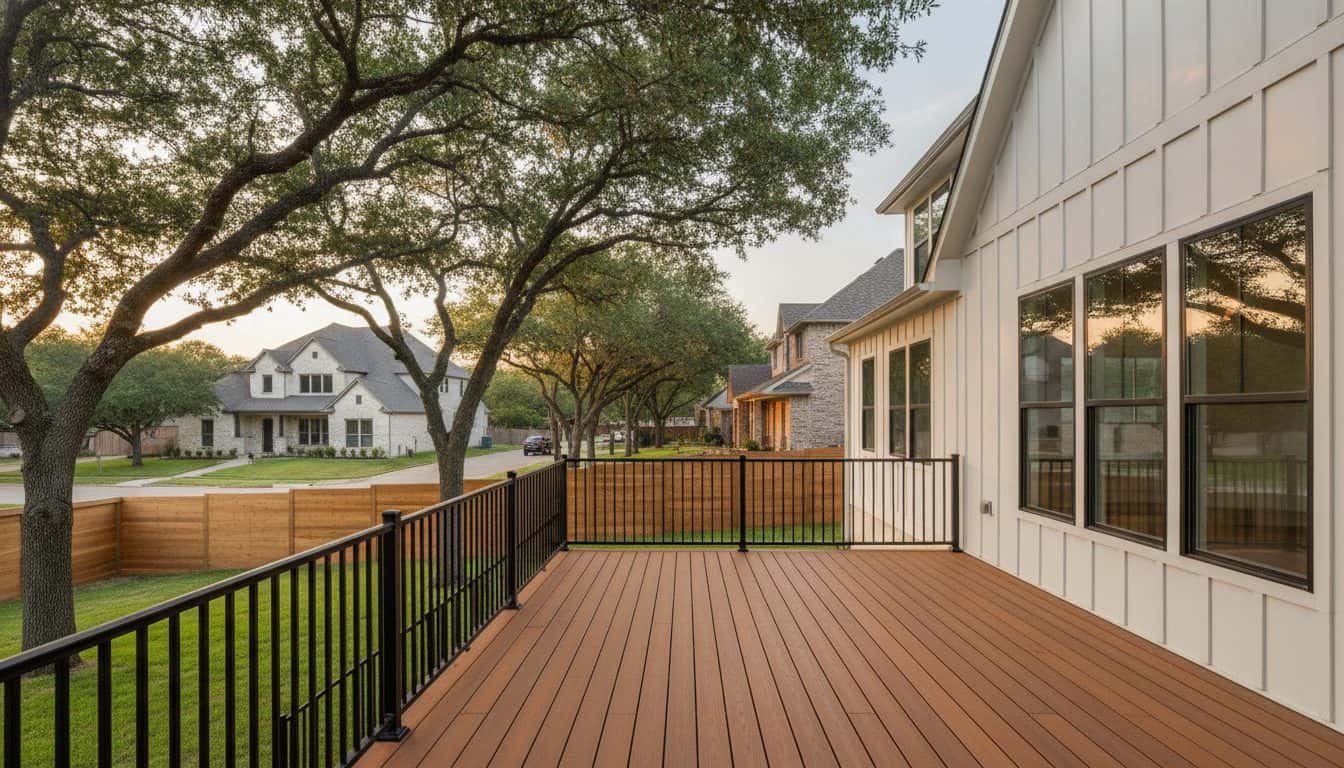
Deck Replacement & Resurfacing
Keep the structure, replace the surface — or replace the whole deck. We tell you honestly which one you need.
Not every tired deck needs to be torn out. A deck is really two things stacked: the structure — footings, posts, beams, joists, and the connection to the house — and the surface you see and walk on. Often the surface is weathered, splintered, or dated while the structure underneath is still sound. In that case you can resurface: keep the framing and replace only the boards and railing, at a fraction of the cost and disruption of a rebuild. Other times the structure itself is failing, and no new surface will fix a deck that is moving underneath you.
The honest answer depends on what we find, so we start by assessing the structure, not the boards. We check footings and posts for movement and rot, probe the beams and joists, and look hard at how the deck attaches to the house — the ledger connection is where the worst and most dangerous failures hide. If the framing is solid, resurfacing is the faster, lower-cost path and we will say so. If it is compromised, no surface will save it and we rebuild. One crew does the assessment and the work, so the recommendation and the repair come from the same accountable team.
Resurface or rebuild — how we decide
The decision lives in the structure, so that is what we inspect first. We look at the footings and posts for movement, heave, or rot at grade; we probe the beams and joists for soft spots and check the hangers and fasteners; and we examine the ledger — the board that ties the deck to the house — because a failing ledger is both the most common serious defect and the most dangerous. We also confirm the framing is spaced to carry the surface you want.
If all of that reads sound, resurfacing is the right call: you reuse the most expensive labor already in the ground and pay mainly for a new surface. If we find rot, movement, an undersized frame, or a bad ledger, we tell you plainly and price a repair or a rebuild instead. We would rather lose a resurface job than put a new deck surface over a structure we would not stand on ourselves.
What fails first on a Texas deck
The surface almost always shows its age first — boards gray, splinter, cup, and split under years of Central Texas sun long before the frame is done. That is the good news, because a weathered surface over sound framing is exactly the deck that resurfacing was made for.
The failures that force a rebuild tend to be hidden. Moisture collects and rots wood at the connections and where the deck meets the house, expansive clay soil heaves footings and pulls the deck out of level, and a ledger that was flashed poorly or fastened wrong loosens over time. These are the things a homeowner rarely sees from the top, and they are exactly what our assessment is built to catch.
What resurfacing can and cannot fix
Resurfacing solves everything you experience from the top down. It gives you a fresh, splinter-free surface, updated railing, and the chance to move from wood to a low-maintenance composite — all while keeping the structure and the footprint you already have. For a deck whose only real problem is a worn-out surface, it is the smart money.
What it cannot do is fix what is wrong underneath. A new surface will not straighten a deck that has heaved, shore up an undersized frame, or make a failing ledger safe — it only hides those problems for a while. When the structure is the issue, resurfacing is the wrong tool, and we will steer you to the repair or rebuild the deck actually needs rather than sell you a surface that papers over a hazard.
Common questions
If the framing is sound, yes — resurfacing keeps the structure and swaps out the boards and railing. It only works when the footings, posts, beams, joists, and the ledger connection to the house are all in good shape, which is exactly what we check before recommending it.
The signs are structural: soft or rotten framing, posts that move, a deck that sags or is out of level, or a loose ledger where the deck meets the house. Those cannot be fixed with a new surface. We assess the structure before recommending anything, so the call is based on what the framing is actually doing.
Often, yes. If the structure is sound and spaced to carry a capped board, an aging wood surface can be replaced with composite on the existing framing. Sometimes the joist spacing needs adjusting for the board, which we confirm during the assessment before quoting the work.
Generally, yes. Reusing sound framing saves the most expensive labor — the footings and structure — so you pay mainly for the new surface. It is only the right call when the structure is genuinely sound; over a failing frame, resurfacing costs money without fixing the real problem.