Composite Decks
Trex, TimberTech, and Fiberon decks built on engineered framing — decking that outlives the fasteners holding everyone else's together.
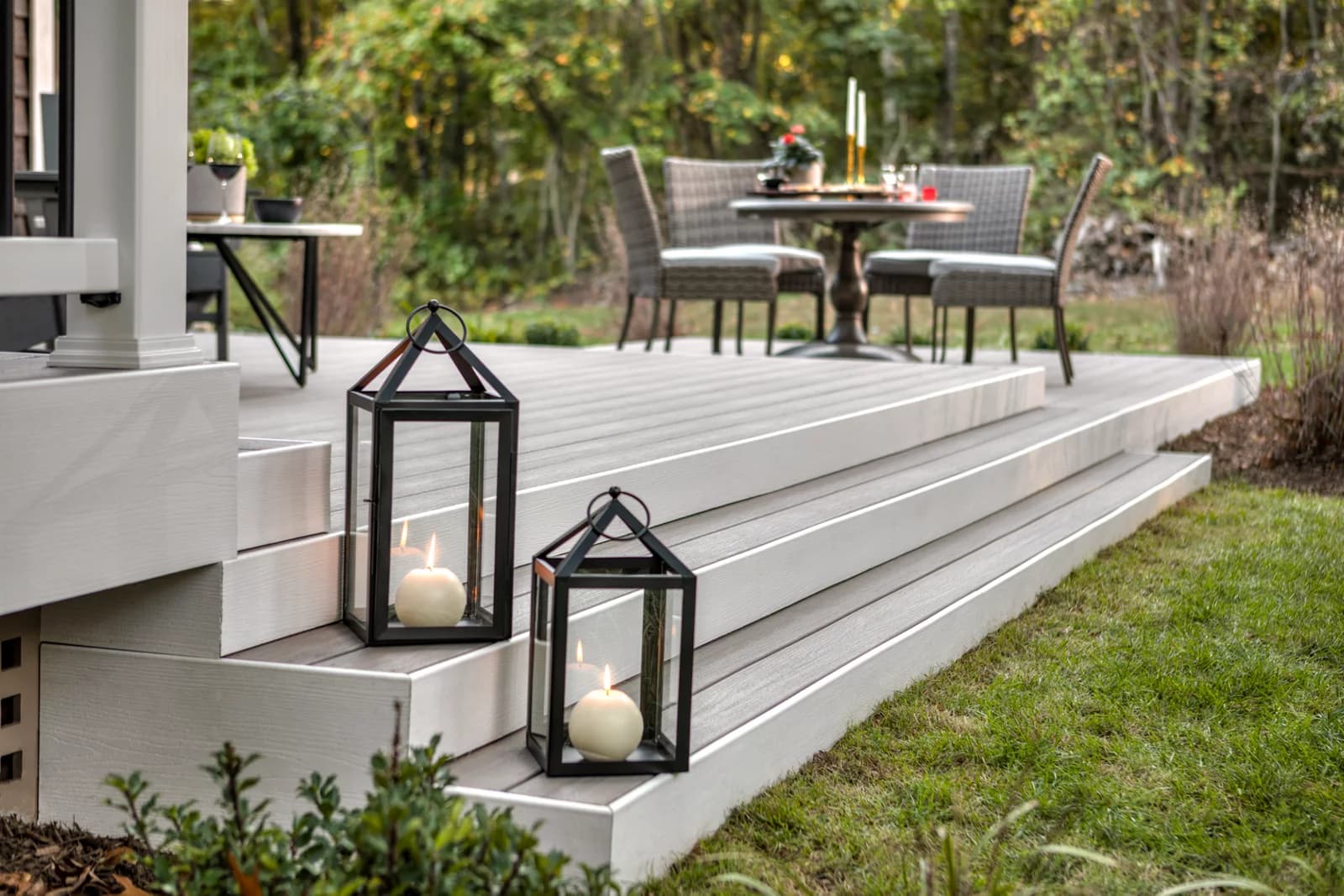
Composite decking is a board with a wood-plastic core wrapped in a hard polymer shell — capped composite — or, at the top of the range, a solid PVC board. The cap is what resists fading, staining, scratching, and moisture, so the surface never needs the sanding, staining, or sealing that wood asks for. XPRT builds with Trex, TimberTech, and Fiberon across value, standard, and premium tiers. The board is the visible half of the deck, but the framing underneath is what decides whether it stays flat and dry.
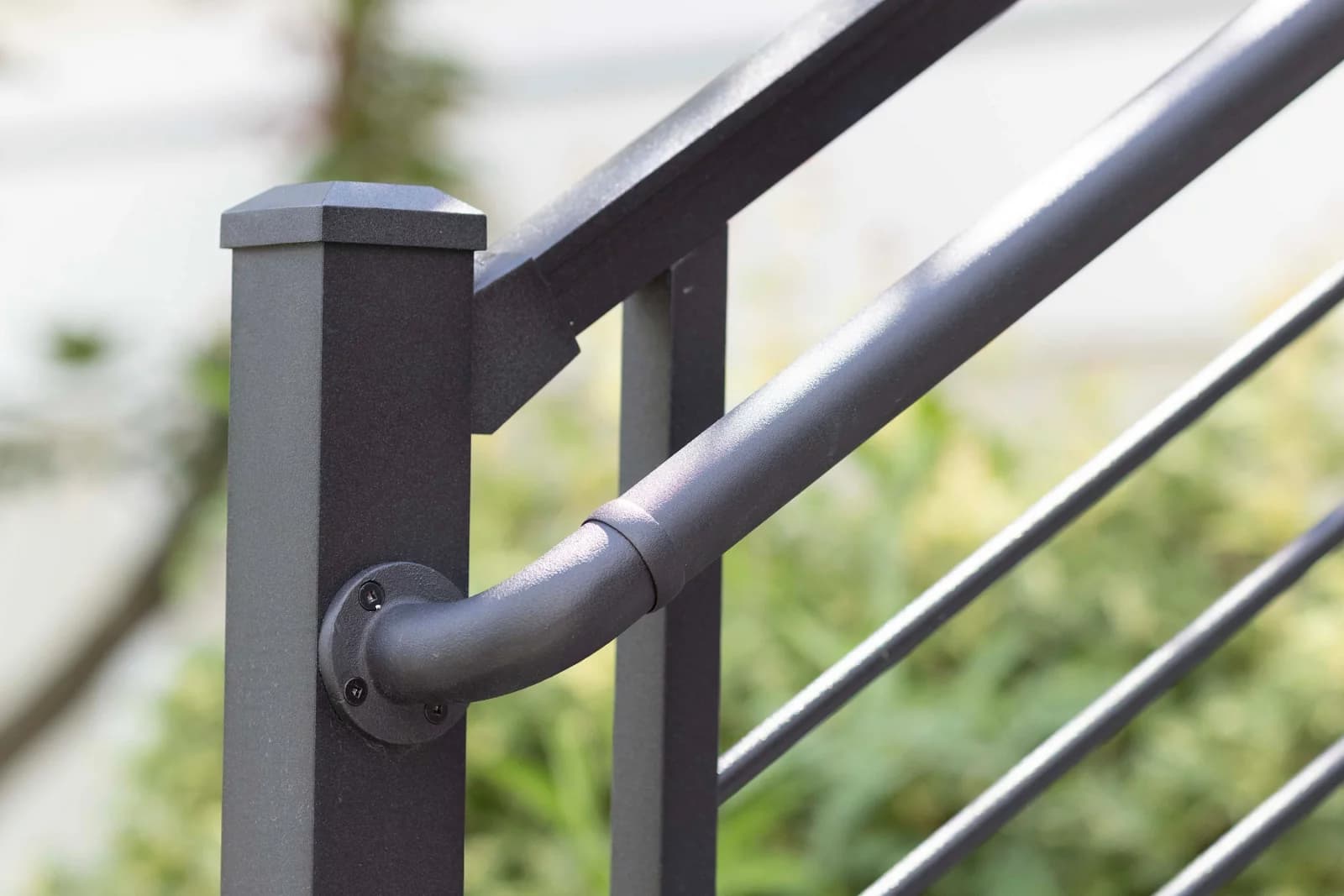
A capped board demands tighter framing than wood ever did. Joists have to be spaced and crowned correctly, the structure has to breathe and drain so the boards stay dry underneath, and every fastener has to hit its mark to keep the surface even. We engineer the substructure, set proper joist spacing and ventilation, and install the boards, hidden fasteners, railing, and fascia to the manufacturer's specification — which is also what protects the board warranty. One crew designs, permits, and builds the whole deck as a coordinated system.
How we build a composite deck
The tagline on the box is low maintenance; the reality is that a composite surface only stays flat and tight if the structure under it is right. We set footings for the soil, size and space the joists for the board and the span, crown and fasten the framing, and detail the structure to drain and ventilate so moisture never gets trapped beneath the deck. Boards, hidden fasteners, and railing then go down to the manufacturer's spec.
That specification is not a formality — installing to it is what keeps the board's fade-and-stain warranty valid, and it is where a lot of cheaper installs quietly cut corners. Because we engineer the structure, pull the permit, and finish the surface as one crew, the framing and the boards are built to the same tolerance and the whole deck is warrantied as a piece of work, not just as a pile of materials.
What Texas heat, sun, and soil do to a deck
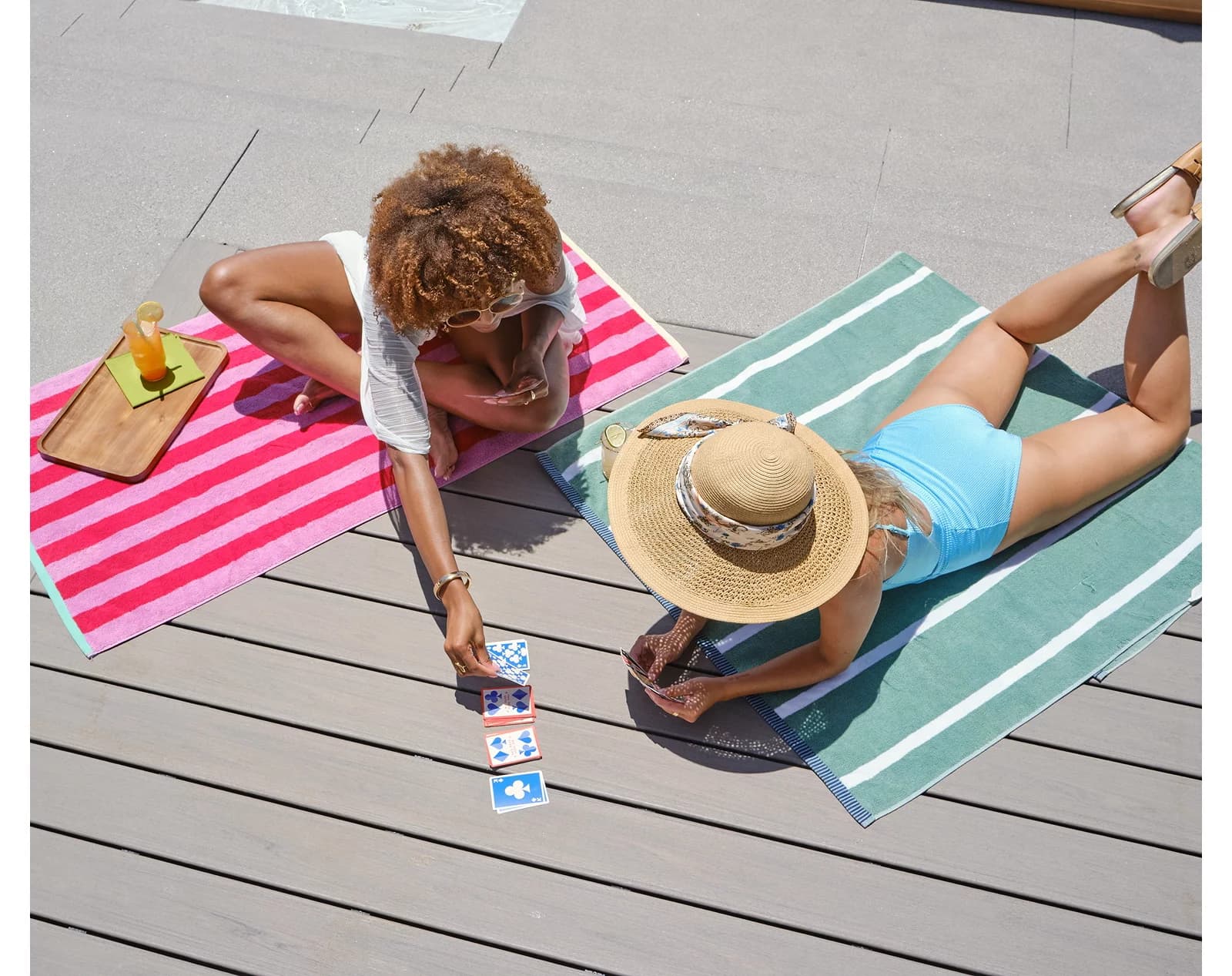
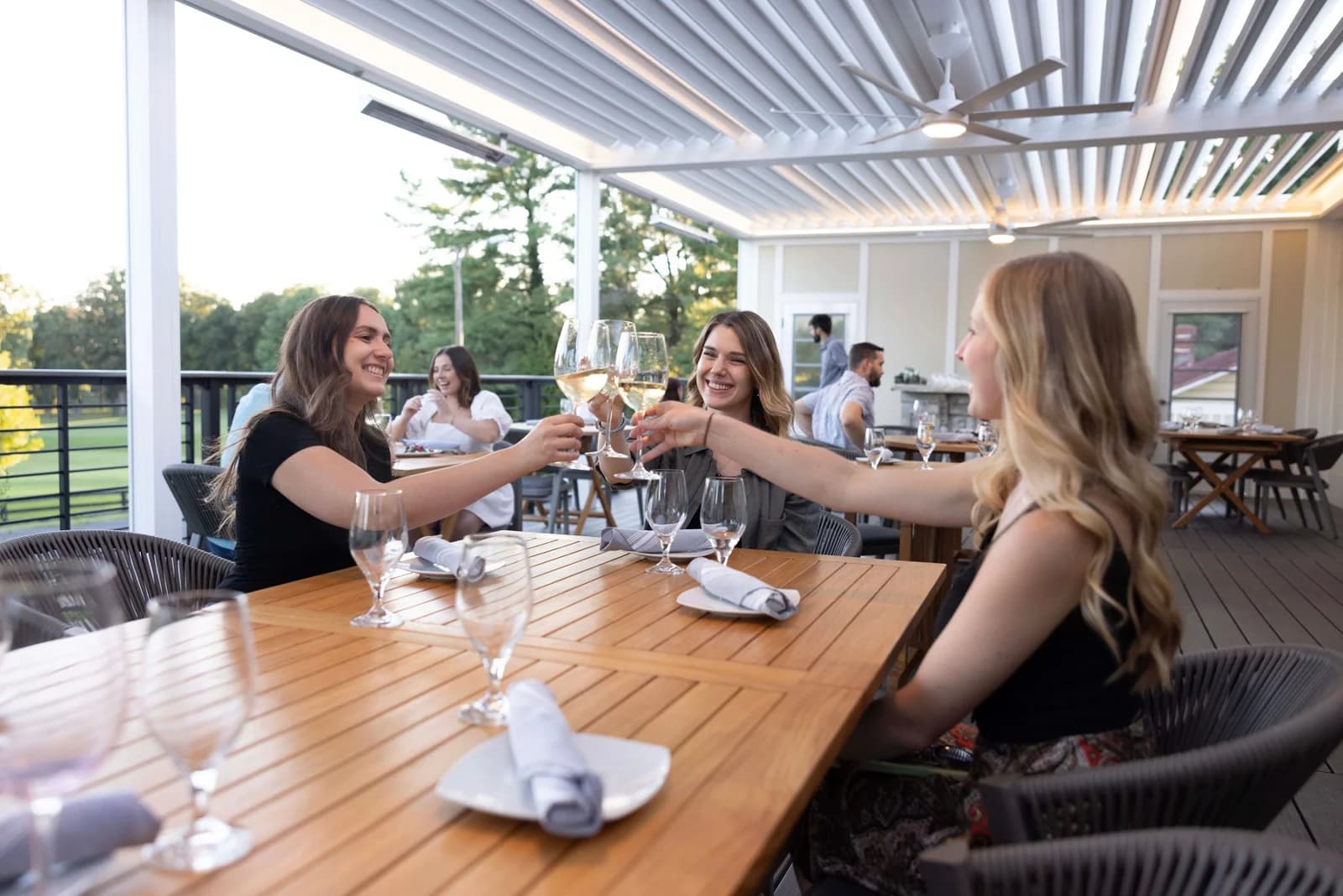
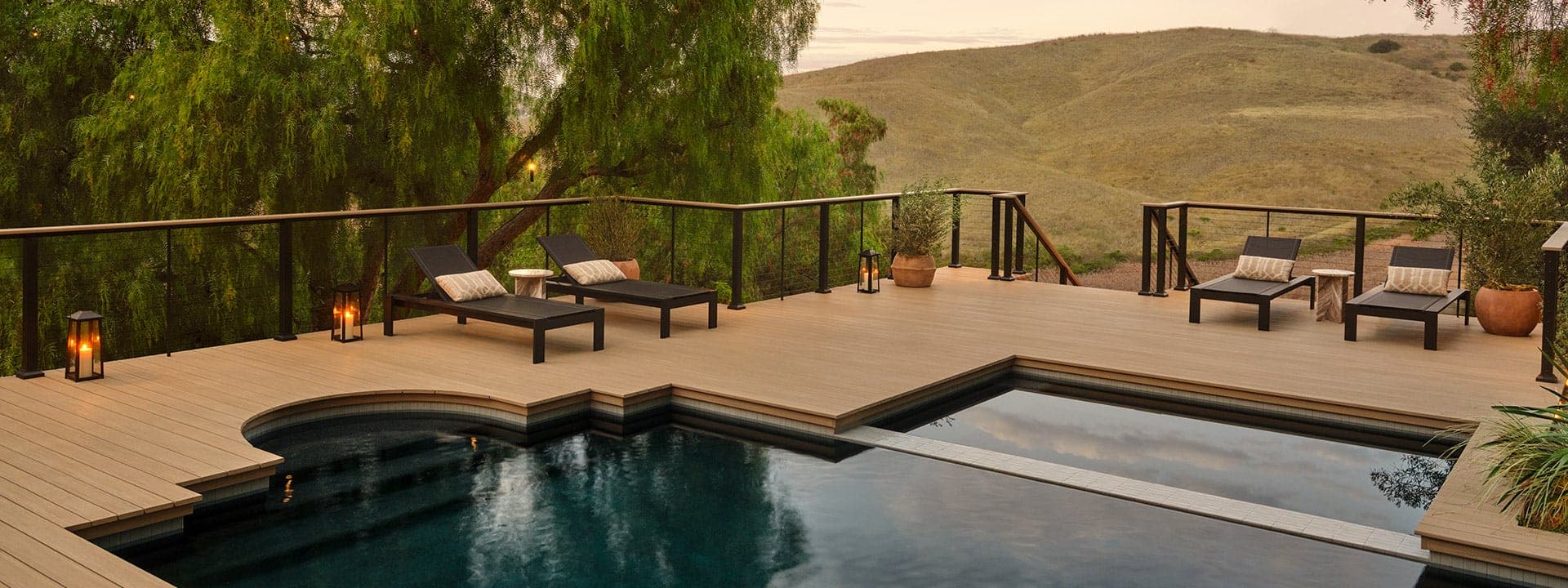
Every deck absorbs heat in full sun, and composite is no exception — darker colors get warmest. Lighter boards and PVC lines run noticeably cooler, and shade from a cover or pergola makes a large difference, so we factor sun exposure into the color and layout we recommend. On the sun itself, the polymer cap is built to resist UV fade far better than a stain coat on wood, which is much of why homeowners move to composite here.
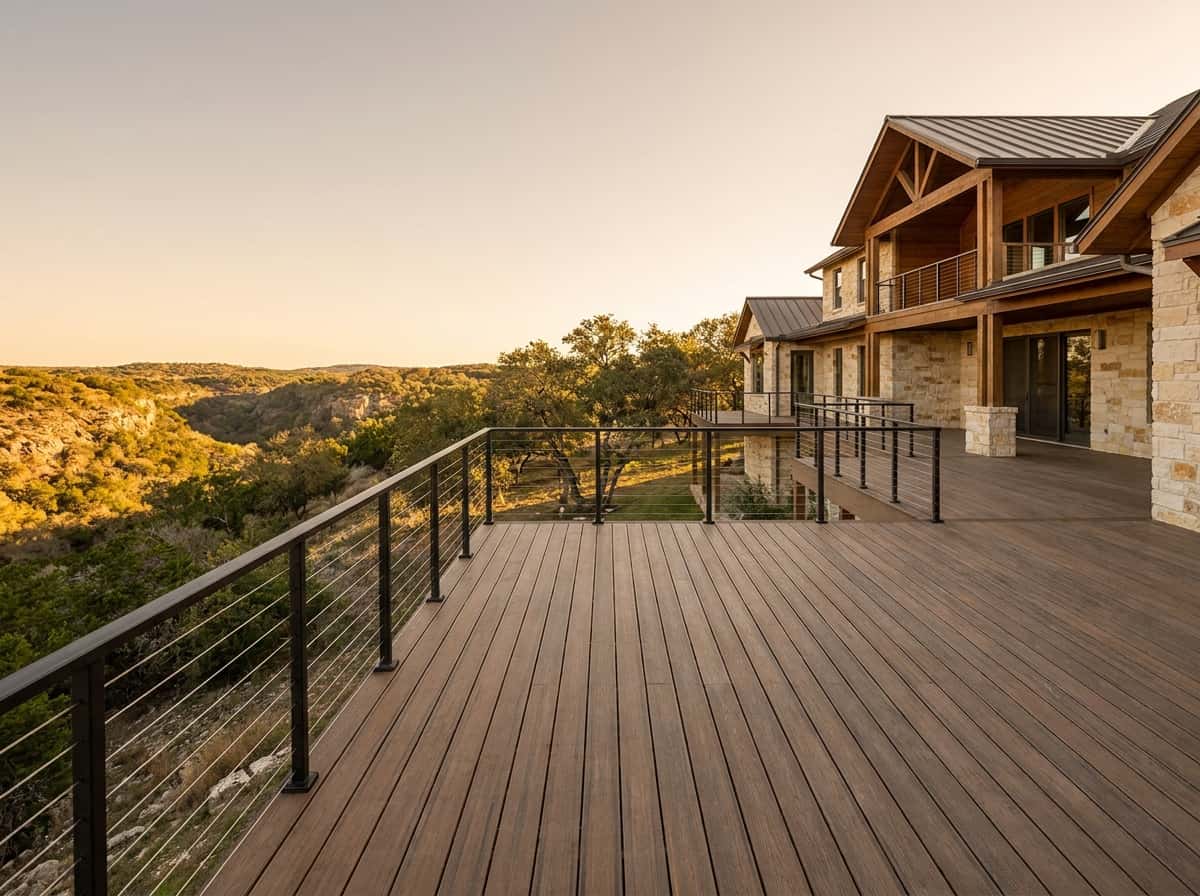
The ground is the other Texas factor. Central Texas clay expands and contracts with moisture, and footings that ignore that will heave and take the deck out of level over time. We set the substructure to account for the soil so the surface stays flat, because a capped board that never rots is wasted on framing that moves.
How to choose a tier
The tiers scale by cap quality, color depth, and warranty length rather than by how well they hold up to weather — every capped line shrugs off spills, splashes, and stains. The value lines give you solid and lightly streaked colors and the core benefit of no sanding or staining. The standard lines broaden the palette and refine the finish, and are where most full-yard decks land.
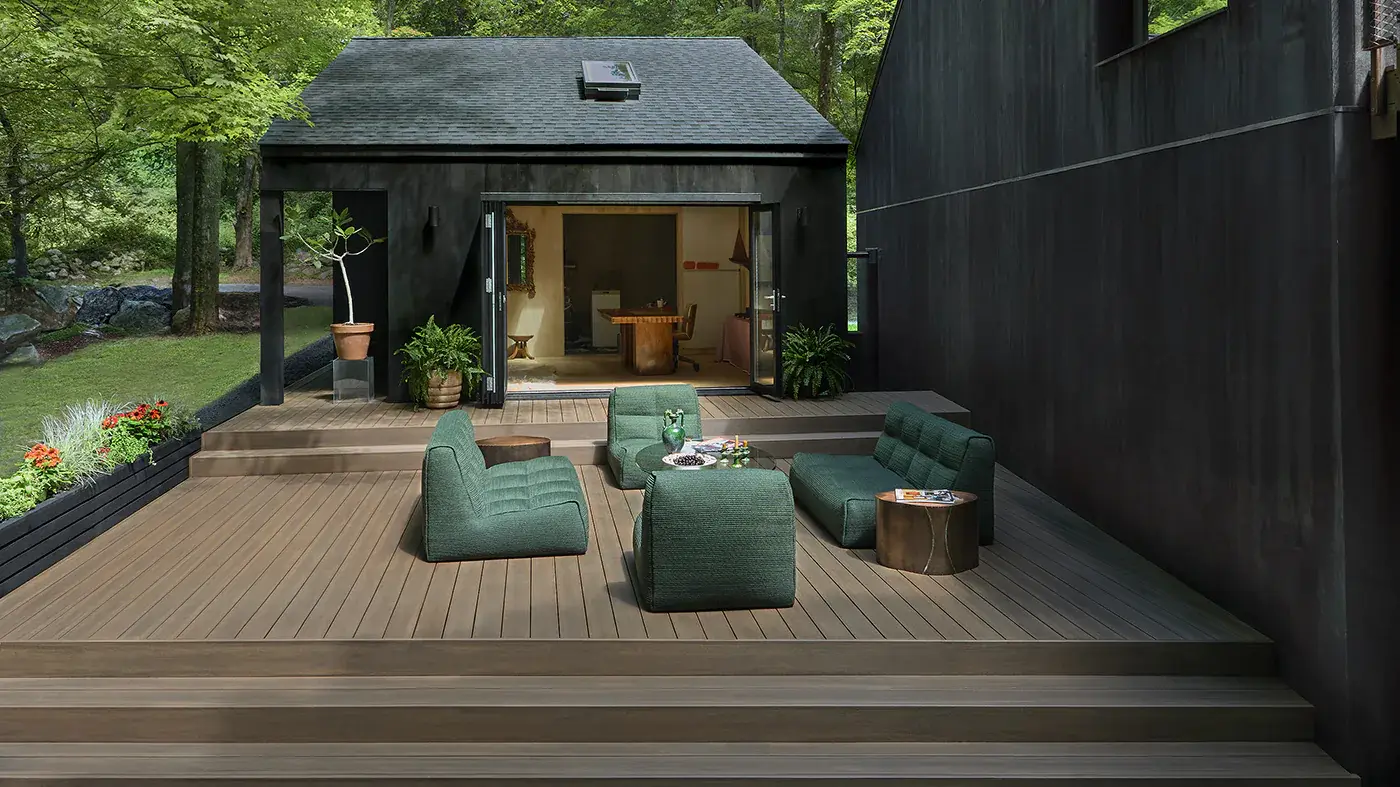
The premium and PVC lines are for homeowners who want the richest, most hardwood-like graining, the longest coverage, and, in the PVC boards, the coolest and lightest surface underfoot. The right tier is a conversation about your look, how much sun the deck takes, and your budget, and we will walk the trade-offs rather than steer you to the top of the range by default.
Common questions
No. The polymer cap resists moisture, stains, and fading, so a composite deck never needs the sanding, staining, or sealing that wood requires. Routine care is soap and water. Ending that maintenance cycle is much of why homeowners choose composite over wood.
Any decking heats up in full sun, and darker colors get warmest, composite included. Lighter colors and PVC boards run cooler, and shade from a cover or pergola makes a large difference. We factor sun exposure into the color and layout we recommend for your deck.
The boards are built to last decades and carry long fade-and-stain warranties, and they easily outlast a poorly framed wood deck. Real-world longevity comes down to the structure underneath — correct footings, joist spacing, and drainage — which is why we frame a composite deck to the tolerance the board deserves.
They scale by cap quality, color depth, and warranty length. Value lines give you the core low-maintenance surface in simpler colors, standard lines broaden the palette, and premium and PVC lines add the richest hardwood-like graining, the longest coverage, and the coolest boards underfoot. We will walk through the trade-offs for your look and budget.