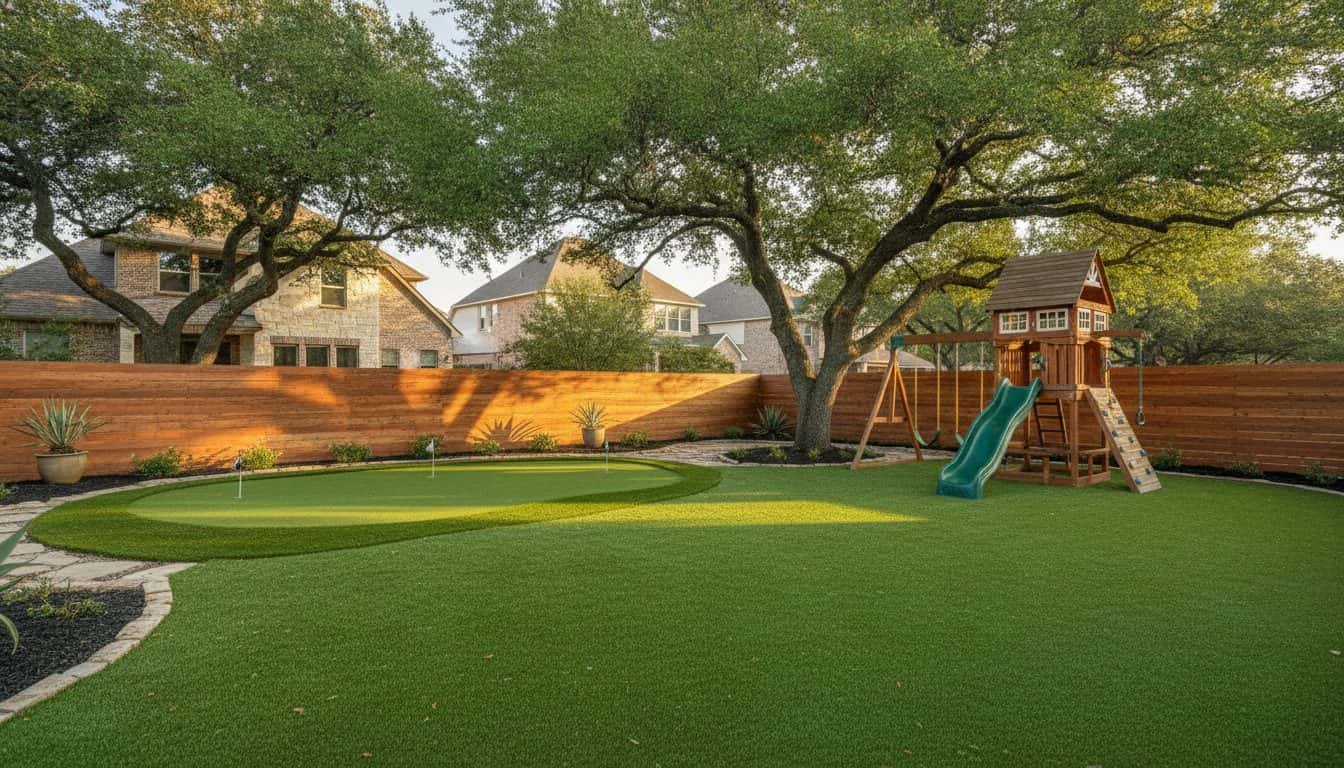
Artificial Turf & Putting Greens
Purchase Green turf with proper base and drainage prep — green in August, no Sunday mowing.
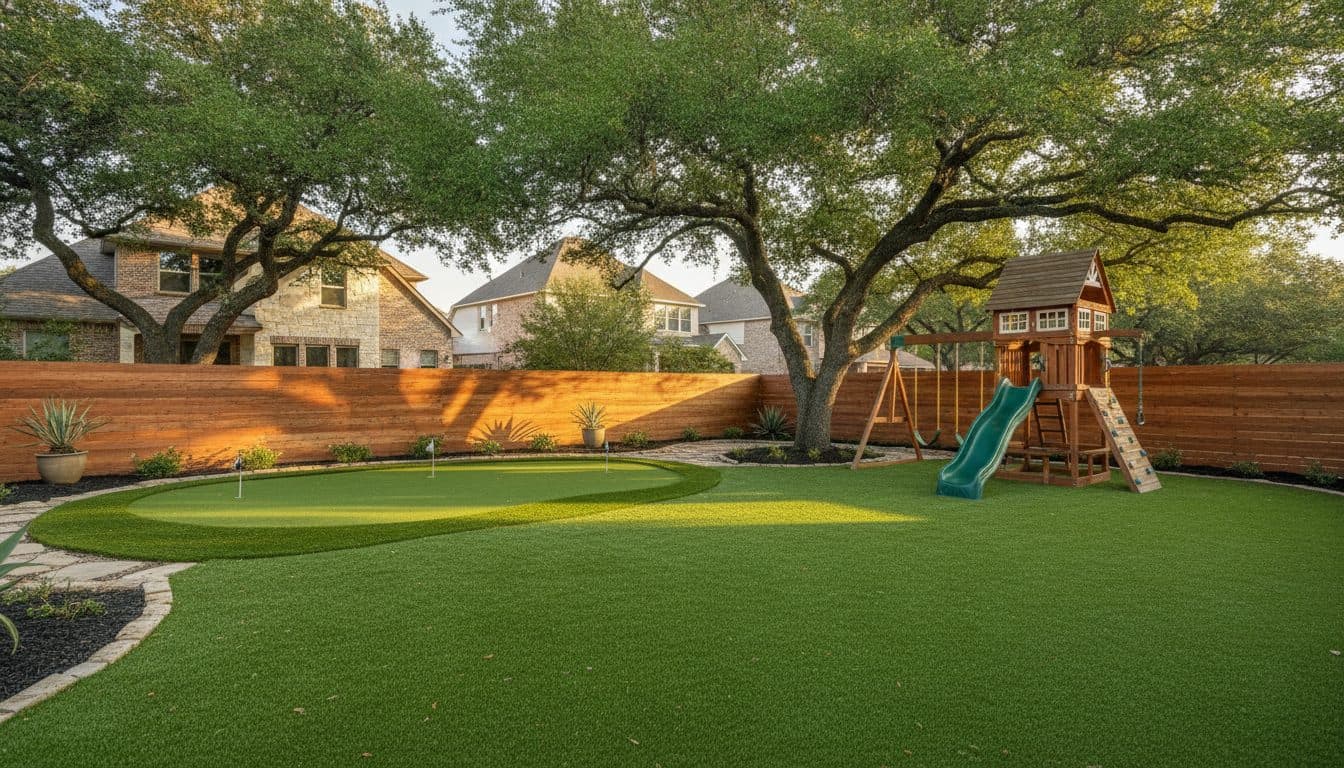
Artificial turf is a synthetic grass surface built over an engineered base, and like a paver patio, the base is the real work. The turf you see is the last and easiest layer; underneath sits a compacted aggregate foundation, graded for drainage, that decides whether the lawn stays flat, drains after a storm, and lasts for years. Done well, it stays green through an Austin August with no watering or mowing. Done poorly, it holds water, wrinkles, and smells. The difference is entirely in the preparation.
We install Purchase Green turf, and we treat the base and drainage as the heart of the job. We excavate, build and compact an aggregate base, shape it to move water, lay the turf tight to the edges, seam it cleanly, and secure and infill it so the blades stand up and the surface stays put. The right infill also keeps the surface cooler and, for pets, helps manage odor. Because our clay holds water, getting the grading and drainage right is what separates a turf lawn that works from one that puddles.
Base and drainage are the craft
A turf lawn is only as good as what is under it. We excavate the existing grass and soil, then build a compacted aggregate base graded to a consistent fall so water runs off and through rather than sitting. That base is what keeps the surface flat and firm underfoot; laid on soft or poorly graded ground, turf ripples, sinks in spots, and traps water. Because it is the layer no one sees, it is also the layer cut-rate installs skimp on first.
Drainage is built into that base, not added afterward. Turf backing is perforated to let water pass, so the aggregate below has to carry that water away, which in our clay soils often means shaping the grade and adding drainage so a storm does not leave a soggy lawn. Get the base and drainage right and the surface sheds rain in minutes and dries fast; get them wrong and no amount of good turf on top will fix a lawn that holds water.
Turf in the Texas heat, and the variants
Synthetic turf takes on heat in direct sun, more than a natural lawn, so the choices that manage temperature matter here. The infill plays a real role: certain infills are designed to hold moisture or reflect heat and keep the surface cooler underfoot, and shade or a nearby structure helps as well. Quality turf is also built with UV-stable fibers so it does not fade or go brittle after a few years of full Texas sun, which is where cheap turf fails first.
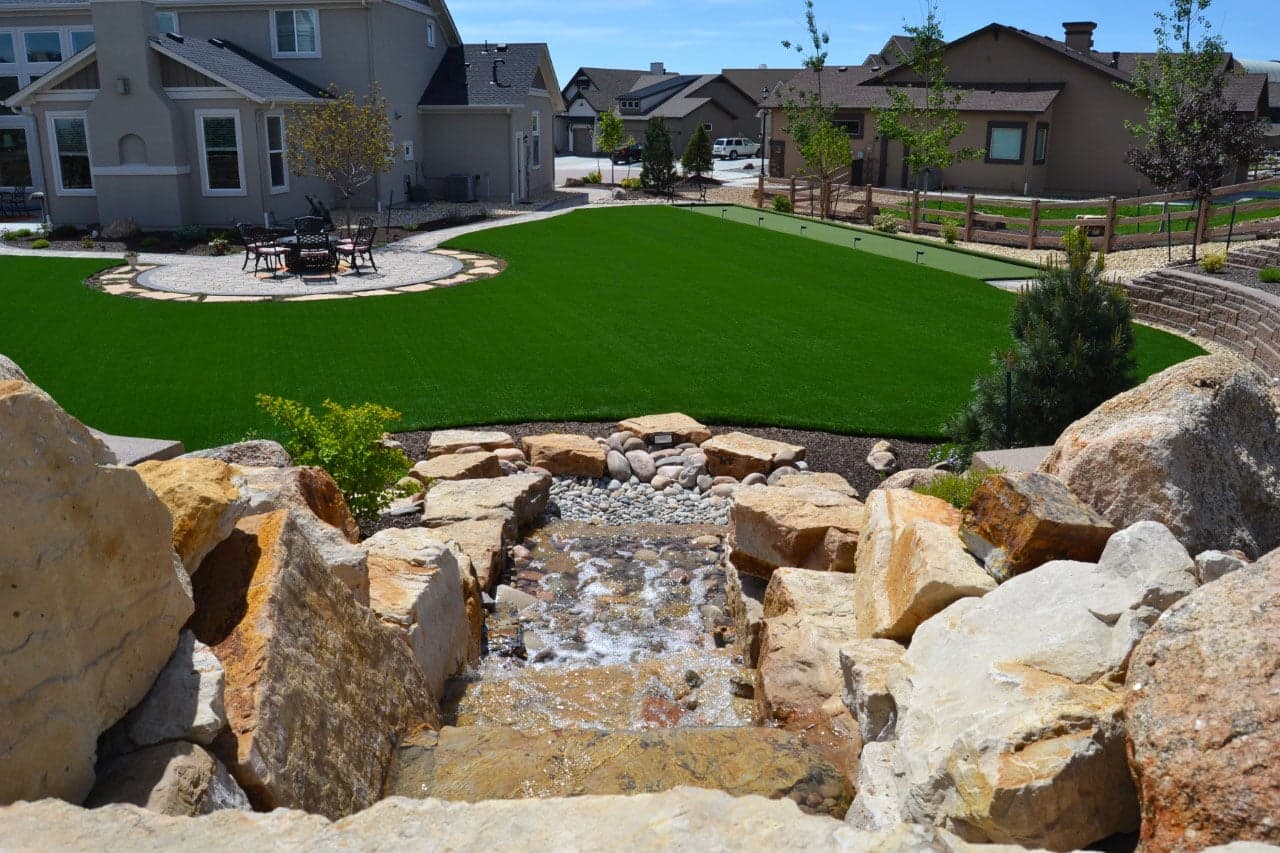
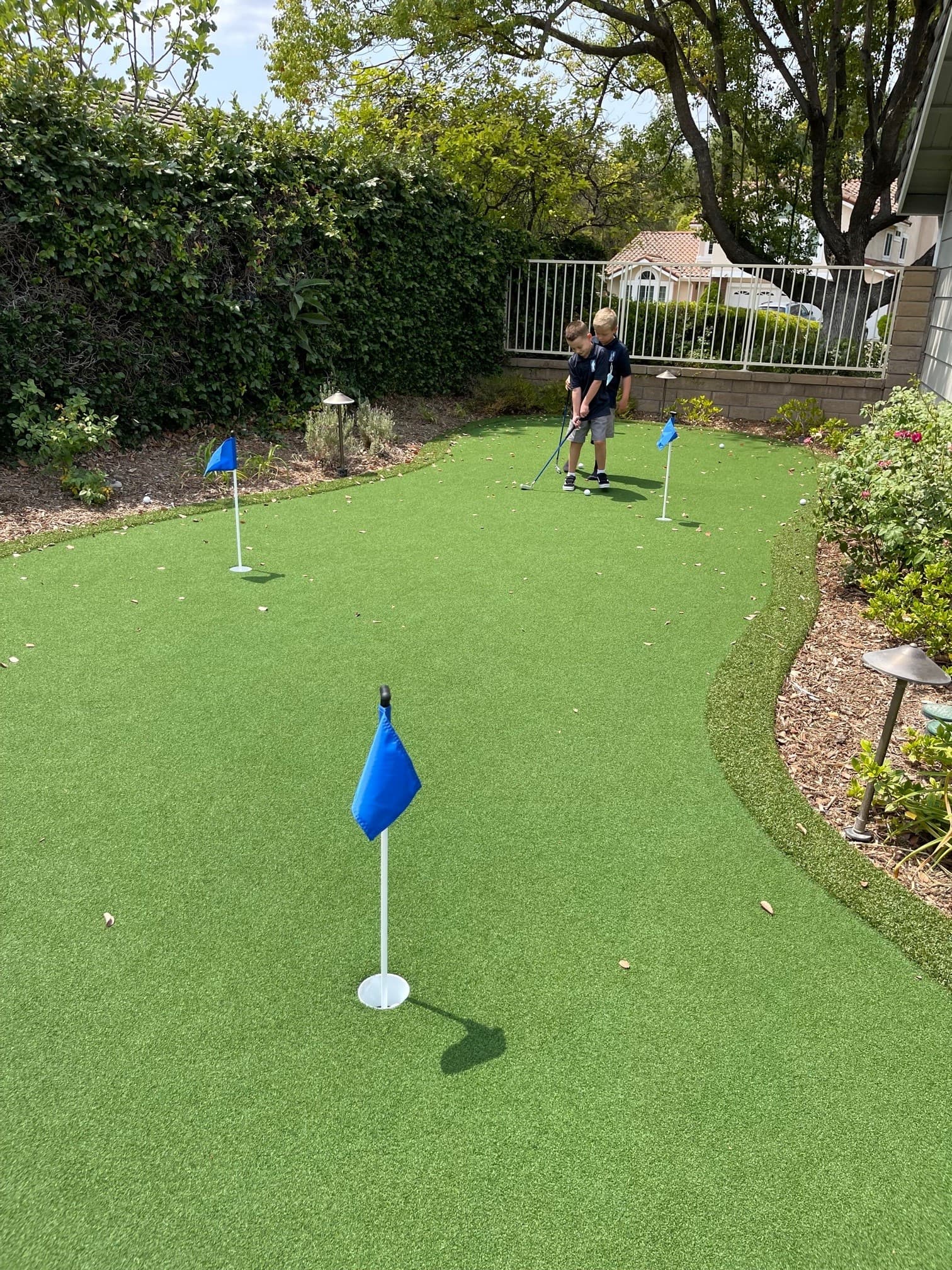
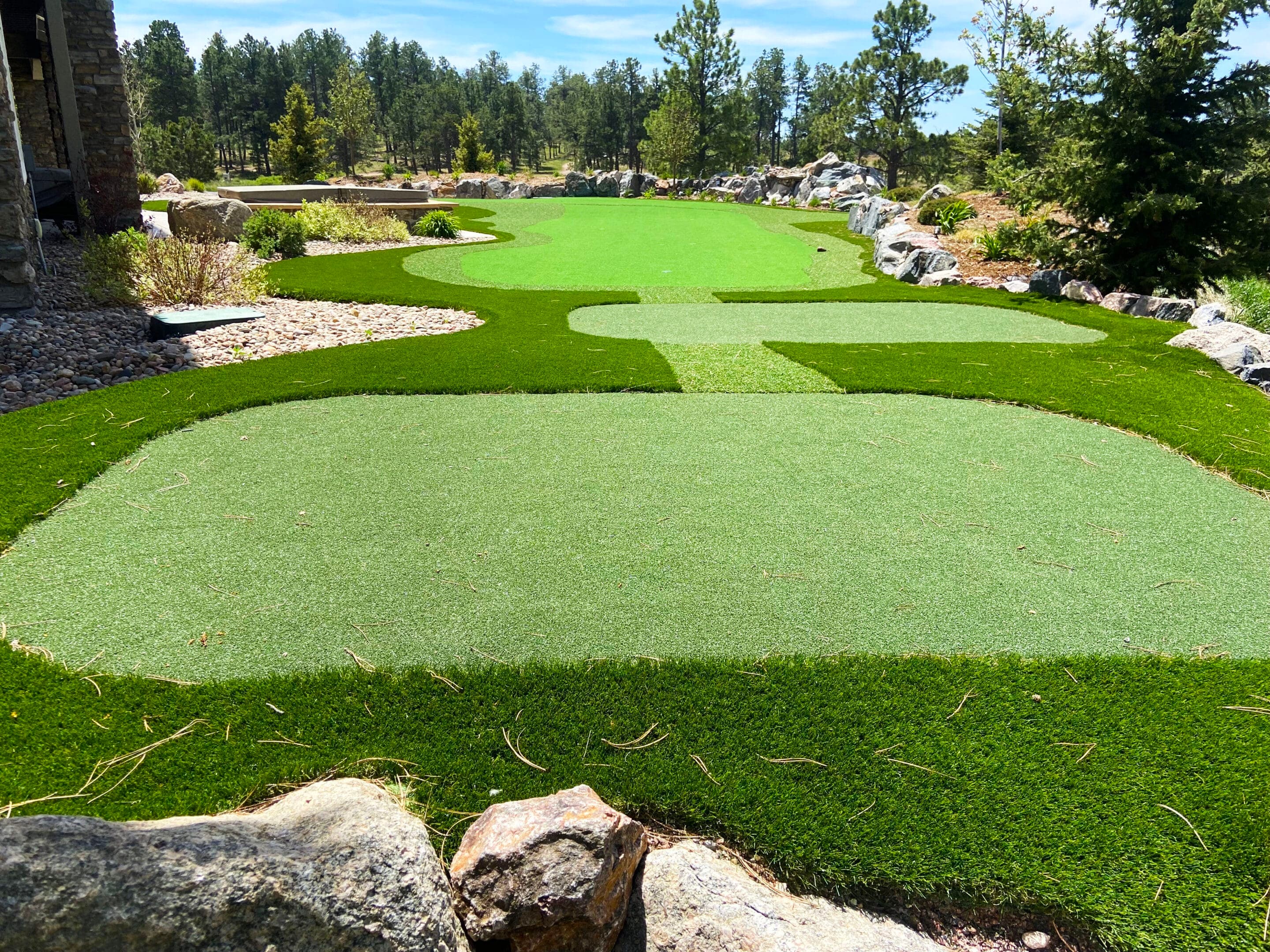
The product changes with the use. Pet turf uses a more durable blade and a free-draining, antimicrobial infill so urine flushes through and odor is controlled, which a standard landscape turf is not built to handle. A putting green uses a short, dense surface rolled and shaped to true contours with real cups. All three sit on the same kind of engineered base; what changes on top is the turf and the infill chosen for the job.
Common questions
It does warm up in direct sun, more than natural grass, which is why infill choice and shade matter. Certain infills are made to hold moisture or reflect heat and keep the surface cooler, and a quick rinse cools it on the hottest days. UV-stable, quality turf also resists fading. Placement and product choice make a large difference in how a lawn feels underfoot.
The turf backing is perforated so water passes straight through it, and the compacted aggregate base beneath is graded to carry that water away. A properly built system drains within minutes of a downpour. Because our clay soils hold water, the base and any added drainage are what make this work, which is why the preparation matters more than the turf itself.
Yes, with a turf built for it. Pet turf uses a tougher blade and a free-draining, antimicrobial infill so liquid flushes through the system and odor is managed, and the surface rinses clean. A standard landscape turf is not designed for that, so the pet-specific system and base are what keep a dog lawn sanitary and long-lasting.
A quality turf on a properly built base commonly lasts many years, with the base doing much of the work of keeping it flat and draining that whole time. Lifespan comes down to the fiber quality, the UV stability, how heavily it is used, and above all the foundation beneath it. Turf laid on a poor base wears and wrinkles long before the fibers themselves wear out.