Sunrooms
Wood-framed sunrooms with PlyGem, Simonton, or ProVia glass — a real room, built like the rest of your house.
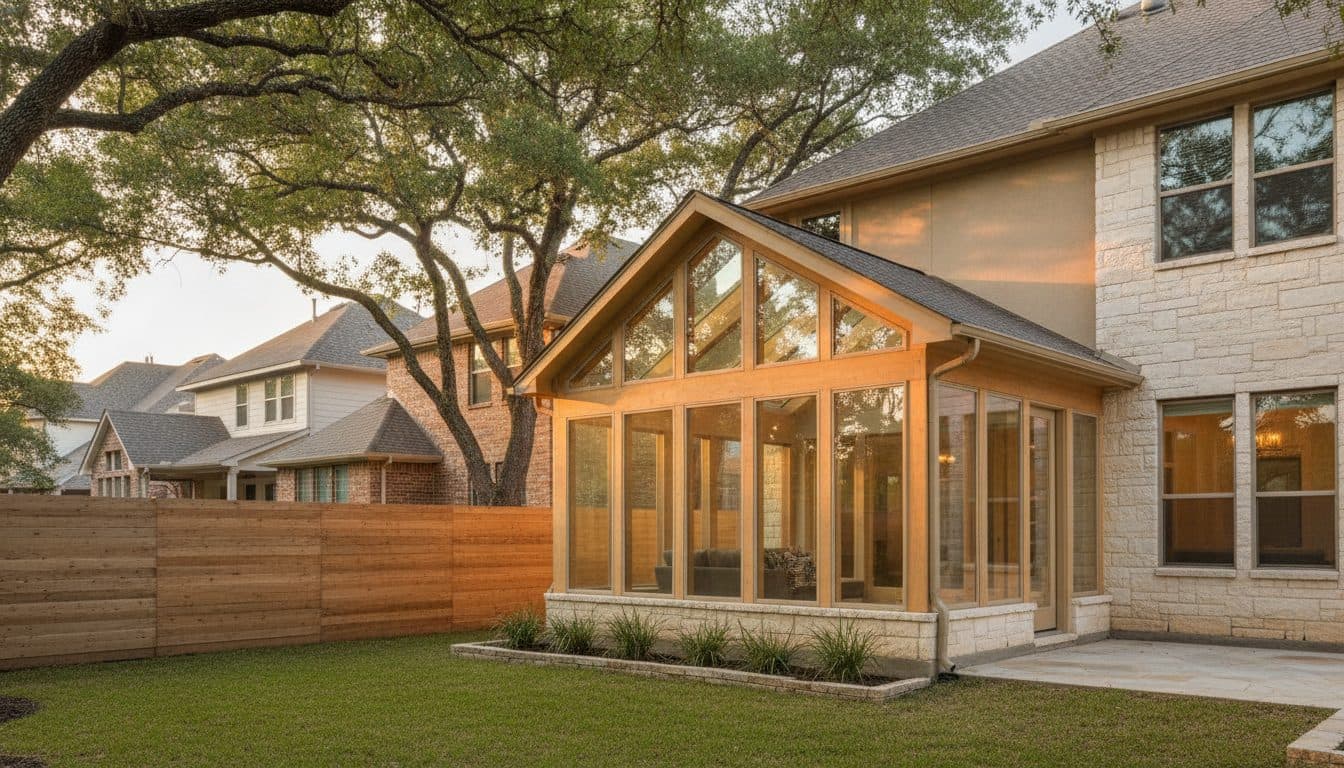
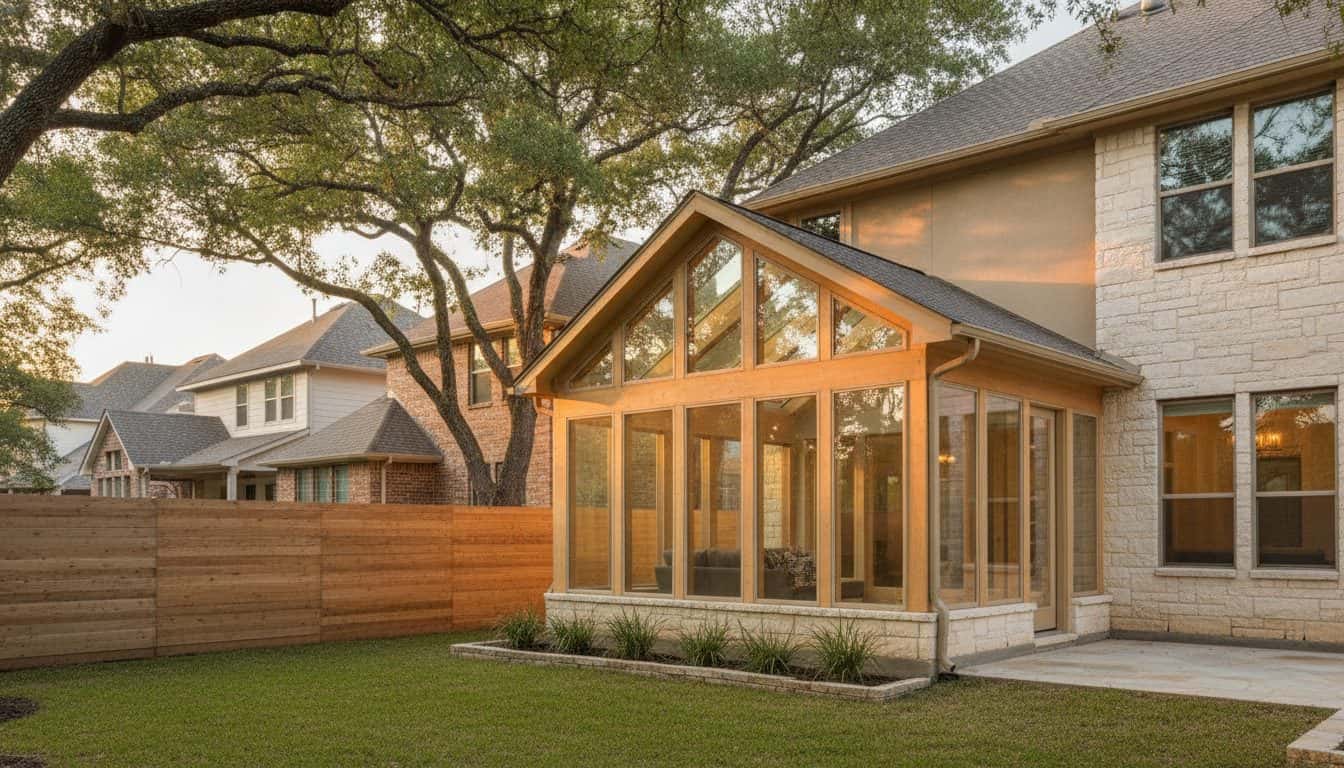
A sunroom is an enclosed, weather-tight room with glass walls, built and finished to the standard of the rest of the house. Unlike a screened porch, it seals against rain and wind and can be tied into heating and cooling, which makes it a genuine year-round room rather than a three-season one. It is where you sit in the depth of a January cold snap or the peak of an August afternoon and still feel like you are in the backyard, because most of what surrounds you is glass.
We build sunrooms as real construction, with a footing, framing, an insulated roof, and a finished interior, not as a kit bolted to a slab. The glass package is the heart of it, and we install window walls from PlyGem, Simonton, and ProVia so the glazing can be matched to how you will use the room and to our climate. Because the room ties into the house structurally and, usually, into its heating and cooling, we build it to hold its temperature and shed water like any other room under your roof.
How a sunroom is built to house standards
A sunroom is enclosed square footage, so it is built like an addition. We set a footing and a slab or subfloor that will not move, frame the walls and an insulated roof, and finish the interior so it reads as part of the home rather than a porch that got walled in. The window walls are then installed as engineered units, sealed and flashed against water the same way the rest of the house is.
Because the room can be conditioned, we plan for how it ties into your heating and cooling from the start, whether that is extending the home's system or adding a dedicated mini-split. The roof is insulated so the space does not bake in summer or bleed heat in winter, and the whole assembly is detailed to be weather-tight. That level of build is what separates a true sunroom from an enclosure that is uncomfortable half the year.
Glass and heat in the Central Texas climate
The glass is what makes a sunroom, and in our climate it is also its biggest challenge. All that glazing takes on solar heat, so the glass package matters: low-emissivity coatings and insulated units reject much of the sun's heat while still giving you the view, which is why stepping up the window tier is often money well spent on a west- or south-facing room. Get the glass right and the room stays comfortable through August; get it wrong and no amount of cooling keeps up.
Orientation and shading feed into the same decision. A room that faces the afternoon sun asks for a better glass package, and sometimes a shade structure or planting outside, more than one facing north. We size the cooling to the glass and the exposure, so the room you use to watch the yard in July is not the room you avoid because it overheats.
Common questions
A sunroom is a sealed, glass-walled room that can be heated and cooled and used every month of the year. A screened porch is open-air living with screens instead of glass, comfortable in the mild seasons but as hot or cold as the outdoors at the extremes. The sunroom is finished, conditioned space; the porch is not.
When it is built as a proper addition, insulated, and tied into heating and cooling, a sunroom functions as conditioned space and adds finished square footage to the home. A lighter, unconditioned glass enclosure does not. How it is built, permitted, and connected to the home's systems determines which of the two you end up with.
It can be if the glass is wrong, which is why the glazing package is the most important decision. Insulated, low-emissivity glass rejects much of the solar heat, and cooling sized to the room's glass and orientation handles the rest. Built for our climate, a sunroom stays usable through the hottest weeks; built with basic glass, it overheats.
Usually, yes. Because a sunroom is enclosed, structural, and often tied into electrical and mechanical systems, most jurisdictions treat it as an addition requiring permits and inspections. That is part of what distinguishes it from a screened porch and part of what we handle as part of the build.