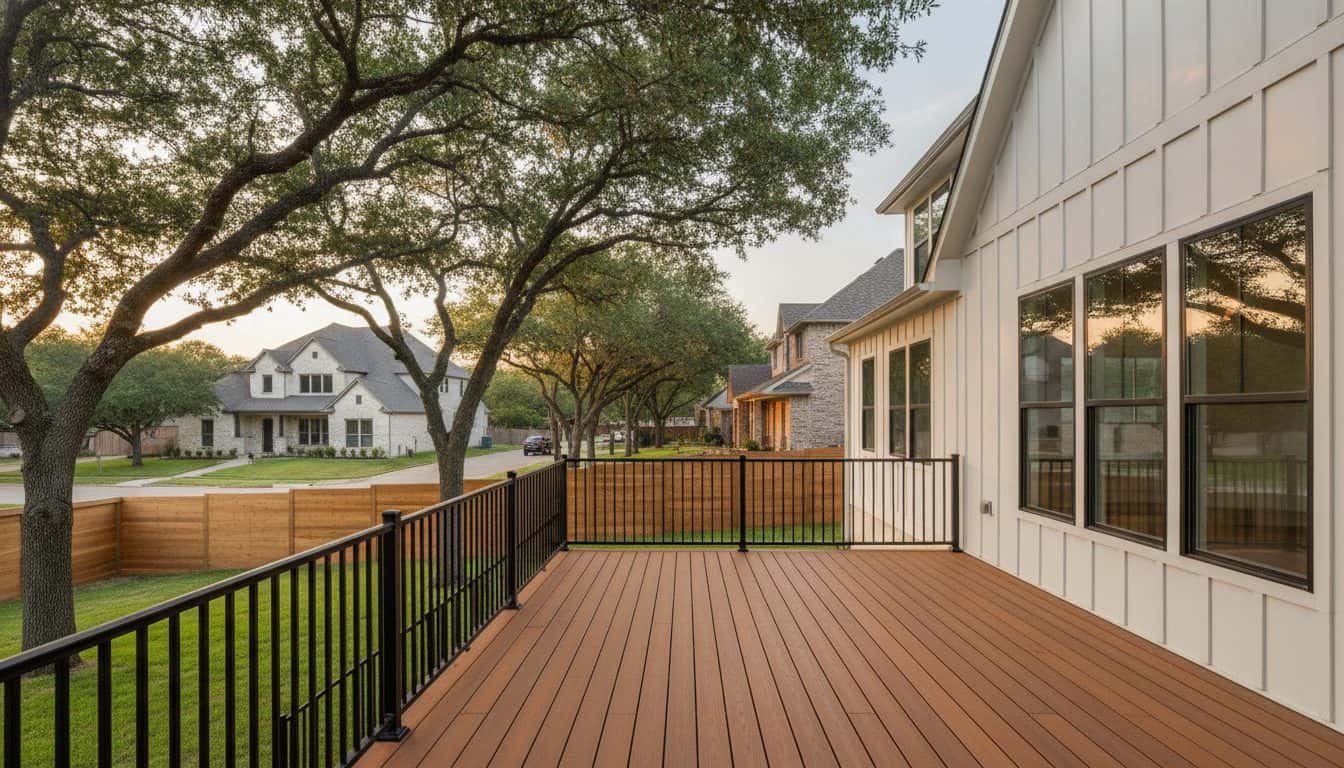
Wood Decks
Pressure-treated and cedar decks, built by crews that frame to composite tolerances.
A wood deck is still the most natural-looking surface you can put in a backyard, and for many homes it is the right call. XPRT builds in pressure-treated pine and in cedar. Pressure-treated is the workhorse — chemically treated to resist rot and insects at a friendly price and ready for stain or paint. Cedar is the step up, naturally rot- and insect-resistant with warmer color and grain. Both are real carpentry, and both age; the trade for that natural look is a maintenance cycle that composite does not ask for.
What separates a wood deck that stays flat from one that cups and gaps is the framing and the build, not the species. We frame wood decks to the same tolerances we hold on composite — footings set for the soil, joists crowned and spaced correctly, the structure detailed to drain and breathe — and we finish the railing, stairs, and skirting to match. One crew engineers the structure, pulls the permit, and builds the deck, so the surface has something square and solid to sit on for the life of the wood.
How we frame a wood deck
A wood deck earns its reputation for problems when it is framed loosely — undersized footings, joists left uncrowned, hardware that corrodes, structure that traps water at the connections. We build to avoid exactly that: footings set for the soil, joists sized and spaced for the span, corrosion-rated fasteners and hangers, and the structure detailed so water sheds and the framing dries out.
We hold wood to the same standard we hold composite, because the boards are only as good as what carries them. Framed square and solid and attached to the house correctly at the ledger — the connection where the worst deck failures start — a wood deck stays flat and safe, and it gives you the option to resurface with a longer-lasting board down the road.
What the Texas climate does to wood
The same sun that ages a wood cover works on a wood deck. Left alone, exposed wood grays, dries, and checks as the surface loses its oils, which is why a wood deck needs re-sealing or re-staining on a cycle to hold its color and resist splitting. Cedar weathers more gracefully than pine, but no wood is exempt. Plan on cleaning between coats and re-treating on a regular schedule based on how much sun and rain the deck takes.
Below the surface, Central Texas clay is the other factor. The soil expands and contracts with moisture and will heave footings that are not set to account for it, taking a deck out of level over time. We set the substructure for the soil so the framing stays put, because the finest cedar in the world cannot fix a structure that moves.
Wood or composite — choosing honestly
Wood is the right choice when the natural look is the point, when the upfront budget matters, and when you are genuinely willing to keep up the maintenance. There is a warmth and a grain to real wood that even the best composite only imitates, and for a lot of homes that character is worth the routine it asks for.
Composite makes more sense when you would rather never sand or seal again and are willing to pay more upfront to buy that freedom. Because we build both, we have no reason to push you either way — we would rather you pick the surface you will be happy maintaining than sell you a wood deck you will resent every spring or a composite deck you did not need.
Common questions
Plan to re-seal or re-stain the exposed wood on a regular cycle to keep it from graying, drying, and checking in the Texas sun, with cleaning in between. How often depends on how much sun and rain the deck takes. A wood deck is a surface you maintain rather than one you can ignore.
Pressure-treated pine is the more affordable, durable workhorse and takes stain or paint well. Cedar costs more but brings warmer color and grain and naturally resists rot and insects. Both still need sealing on a cycle, so the choice comes down to your budget and how much the look matters to you.
Built and maintained properly, a wood deck lasts many years. Longevity is decided more by the quality of the framing and how faithfully you keep up the sealing than by the boards themselves, which is why we frame to tight tolerances and detail the structure to drain and dry.
Often, yes. If the framing is sound and correctly spaced, a wood surface can be replaced with composite down the road without rebuilding the structure. We frame wood decks to a standard that keeps that option open, so a wood deck today does not lock out a composite surface tomorrow.