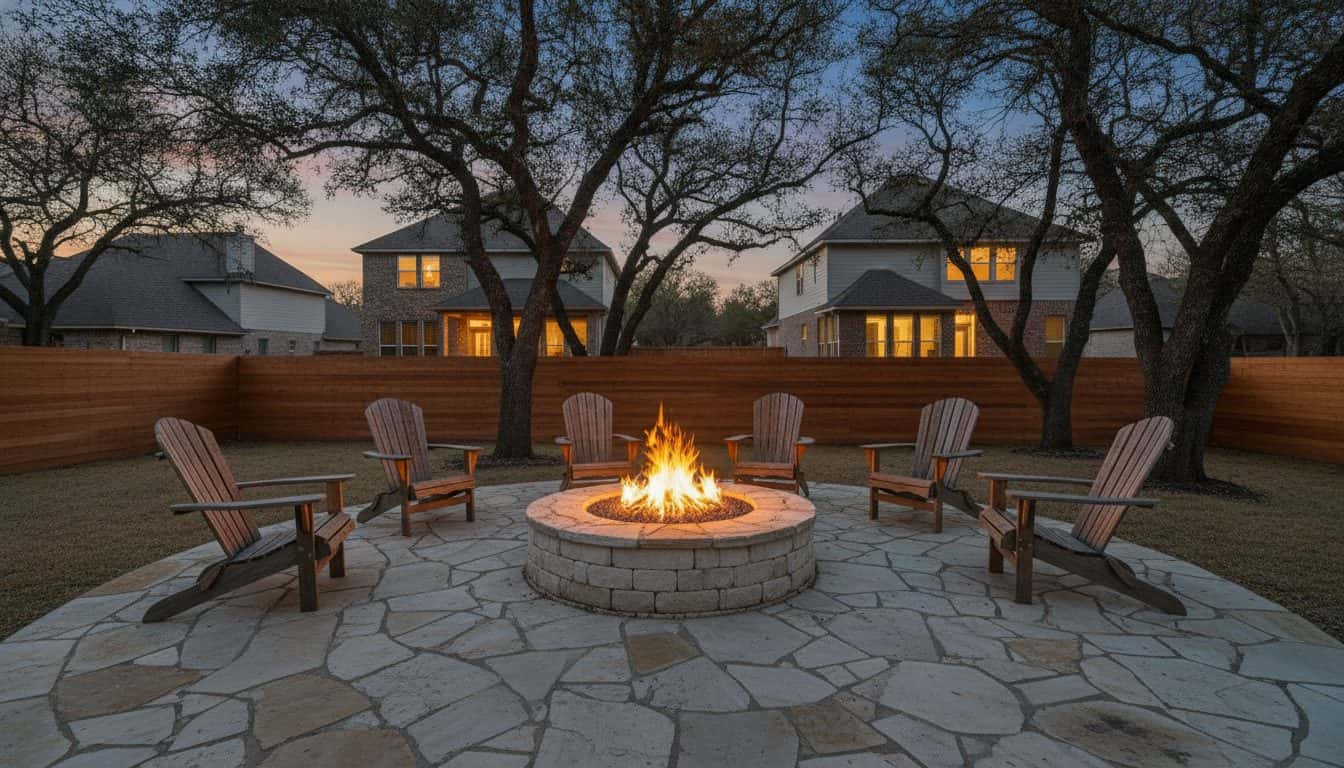
Outdoor Fireplaces & Firepits
Gas and wood-burning fire features in stone and masonry — the reason everyone stays outside in January.
An outdoor fire feature is what keeps a backyard in use once the evenings cool off. It comes in two broad forms: a firepit, which is an open, gather-around bowl or built-in ring, and a fireplace, which is a vertical masonry structure with a firebox, a chimney, and a hearth that anchors one end of a patio. Both can burn wood for the crackle and the smell, or run on gas for instant, controllable flame with no ash to clean up.
We build these as masonry, not as a metal insert dropped into a flimsy surround. A fireplace is a real structure, with a footing, firebox, flue, and a stone or stucco face built to draw properly and stand for decades, and a built-in firepit is set on a proper base with the right non-combustible materials around the flame. Where a feature runs on gas, we size and run the line to code and set the controls where you want them, so lighting a fire is the easy part and the structure behind it is sound.
Fireplace or firepit, wood or gas
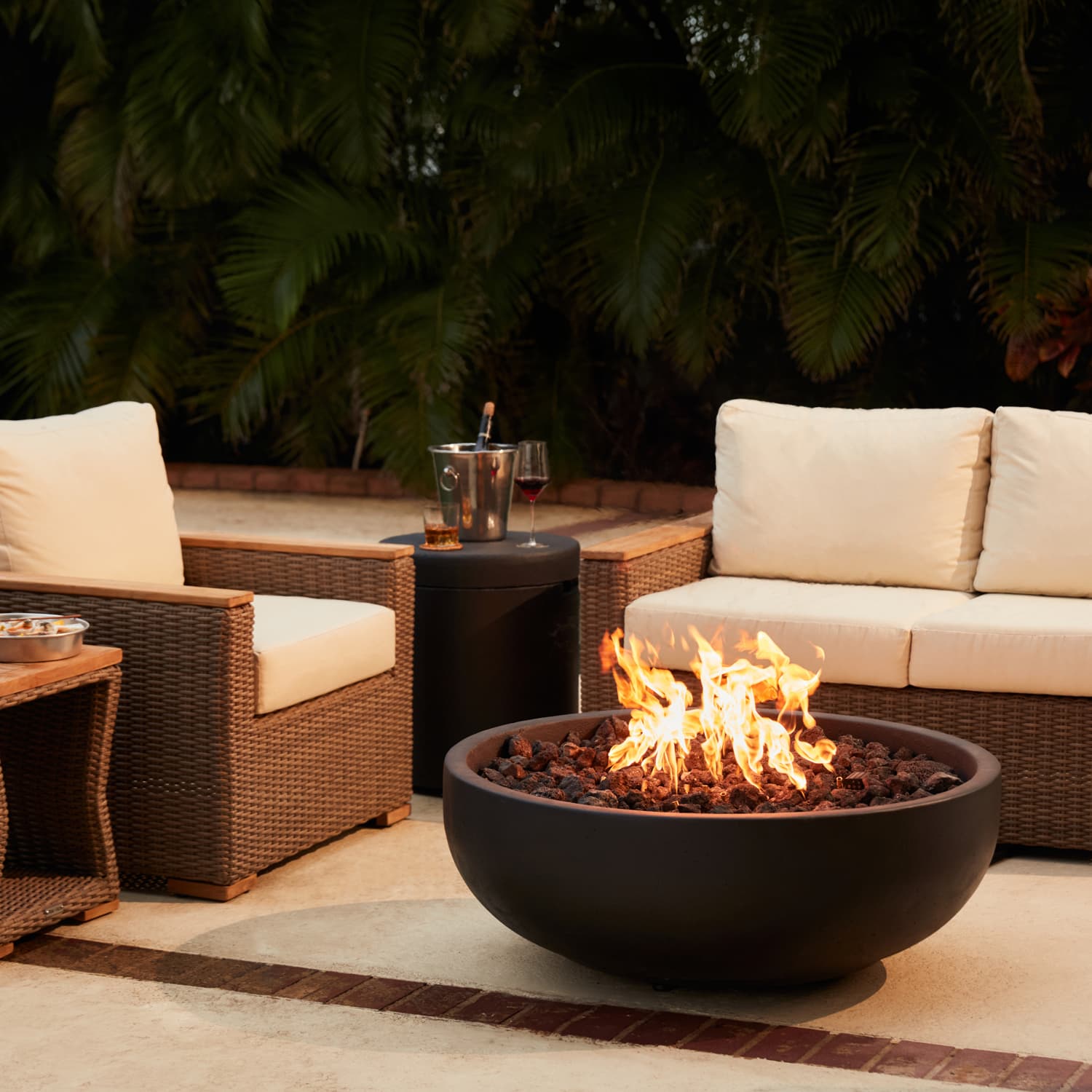
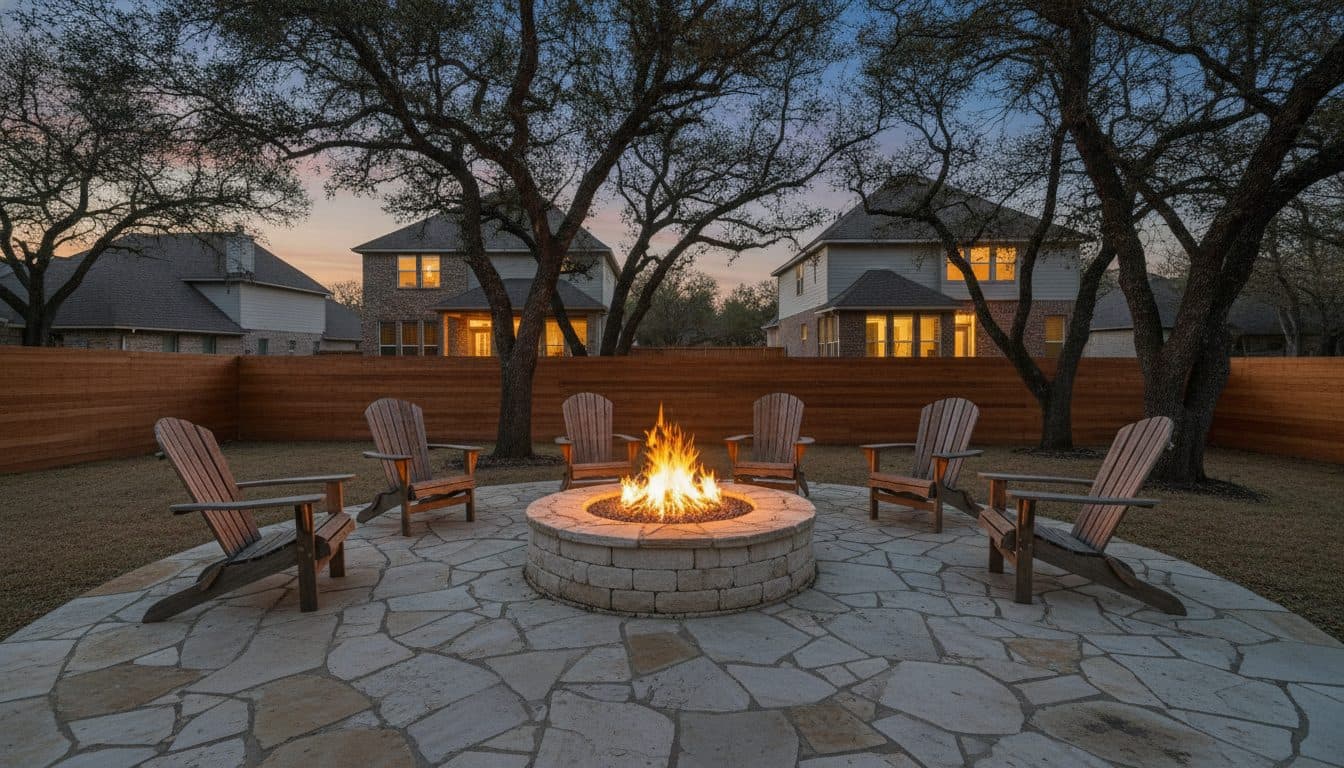
A firepit is social and open: everyone sits around it, it throws heat in all directions, and it suits a casual, gather-in-a-circle patio. A fireplace is architectural and directional: it anchors one edge of the space, throws its heat and light outward from a hearth, and gives a patio a focal point and a bit of a windbreak. Many larger projects include both, in different zones of the yard.
The fuel choice is the other axis. Wood gives you the fire people picture, the crackle, the smell, the ritual of building it, at the cost of storing wood and clearing ash, and with more attention to smoke and clearances. Gas gives you flame at the turn of a switch, precise control, and no cleanup, which is why it is often the practical choice, and in some neighborhoods and during burn bans the only permitted one. Neither is better; they are different experiences.
Building a fire feature to last and to code
Fire and masonry both demand that the work below the surface be right. A fireplace needs a footing that will not shift, a firebox built of the proper firebrick and refractory materials, and a flue sized and shaped to draw smoke up and out rather than back onto the patio. A firepit needs a stable base and non-combustible materials rated for direct flame. Skip those and you get a feature that smokes, cracks, or simply does not last.
Codes and clearances are not optional with fire. Gas features require a properly sized, permitted gas line and safe shutoffs; both wood and gas features have required clearances to structures, covers, and combustible surfaces; and our expansive soils mean the footing has to be built to resist movement that would otherwise crack the masonry. We handle the gas, the structure, and the clearances together, because a fire feature is one place where cutting corners is genuinely unsafe.
Common questions
It depends on the experience you want and your local rules. Wood gives the classic crackle and smell but means storing fuel, clearing ash, and managing smoke and burn bans. Gas lights instantly, offers precise control, leaves no mess, and is often the only type permitted in denser neighborhoods or during dry-season restrictions. Many homeowners choose gas for convenience and wood for atmosphere.
A firepit is a low, open feature you sit around on all sides, good for casual gathering and shared warmth. A fireplace is a tall masonry structure with a firebox and chimney that anchors one side of a patio, directs its heat and light outward, and offers some wind protection. A firepit is more social; a fireplace is more of an architectural focal point.
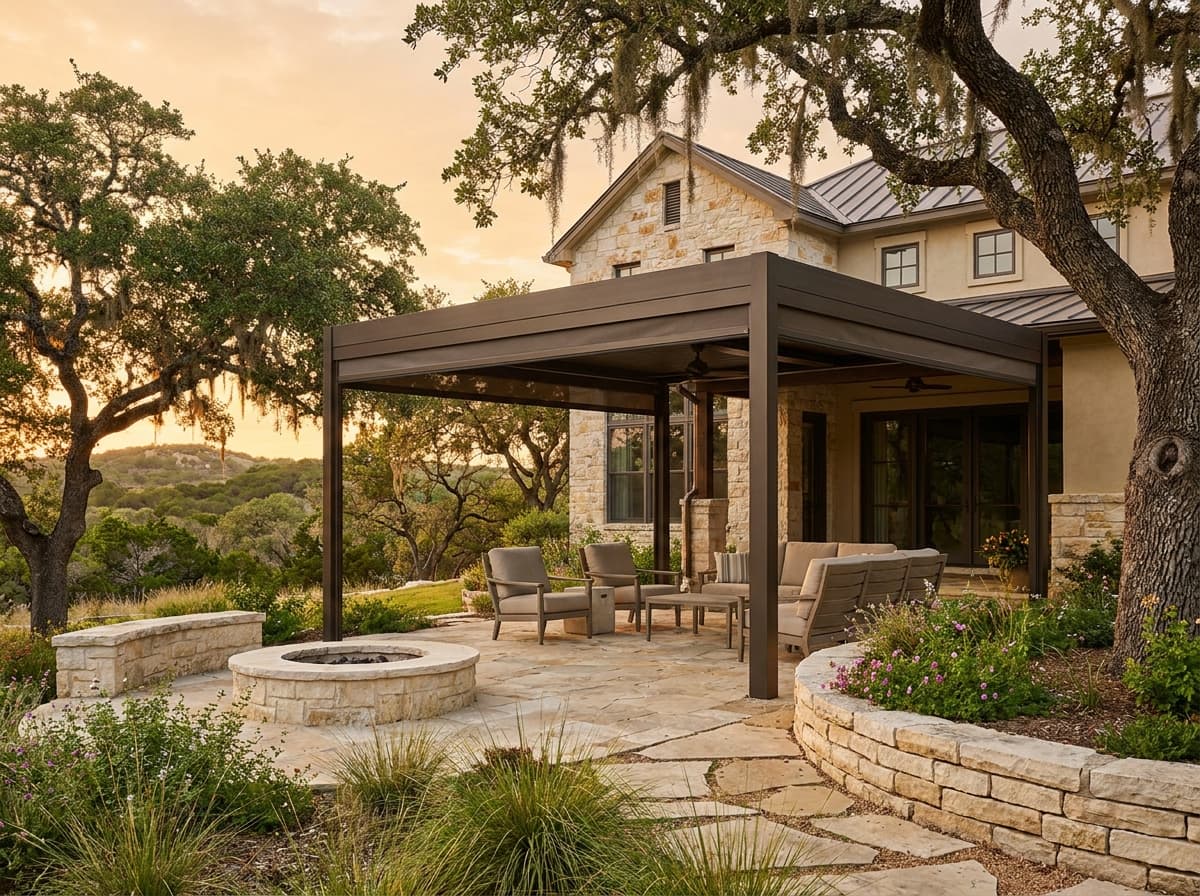
Sometimes, with the right clearances and, for wood, proper venting, but it has to be planned carefully. Open flame and combustible or low structures do not mix without engineering the clearances and, in the case of wood, a flue that carries smoke safely above the cover. This is exactly why the fire feature and any structure over it should be designed together.
Often, yes, especially gas features, which require a permitted, code-compliant gas line, and masonry fireplaces with a chimney. Requirements vary by jurisdiction and even by neighborhood association, and burn bans can restrict wood fires seasonally. Confirming what your location allows and pulling the needed permits is part of building the feature properly.