Frameless Glass Railing
Uninterrupted views off decks and balconies — engineered, code-compliant frameless glass.
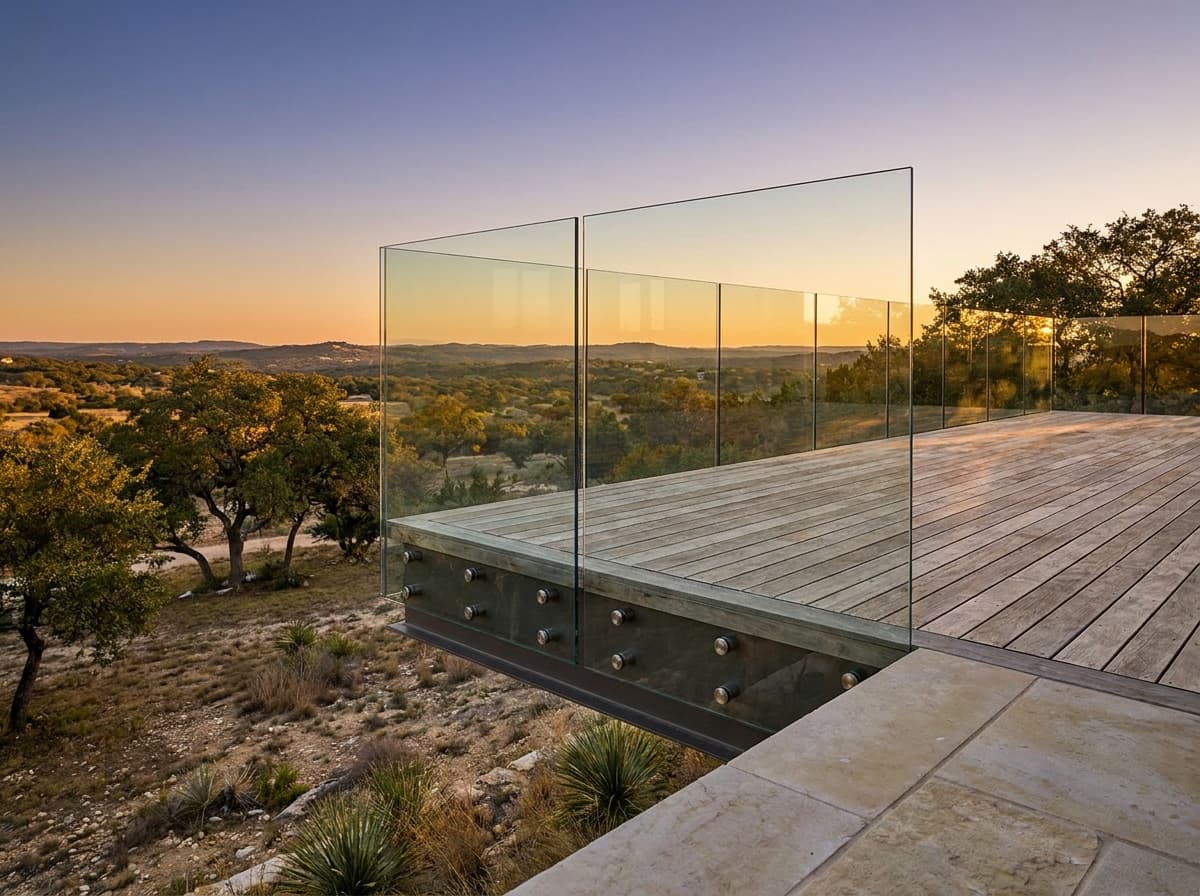
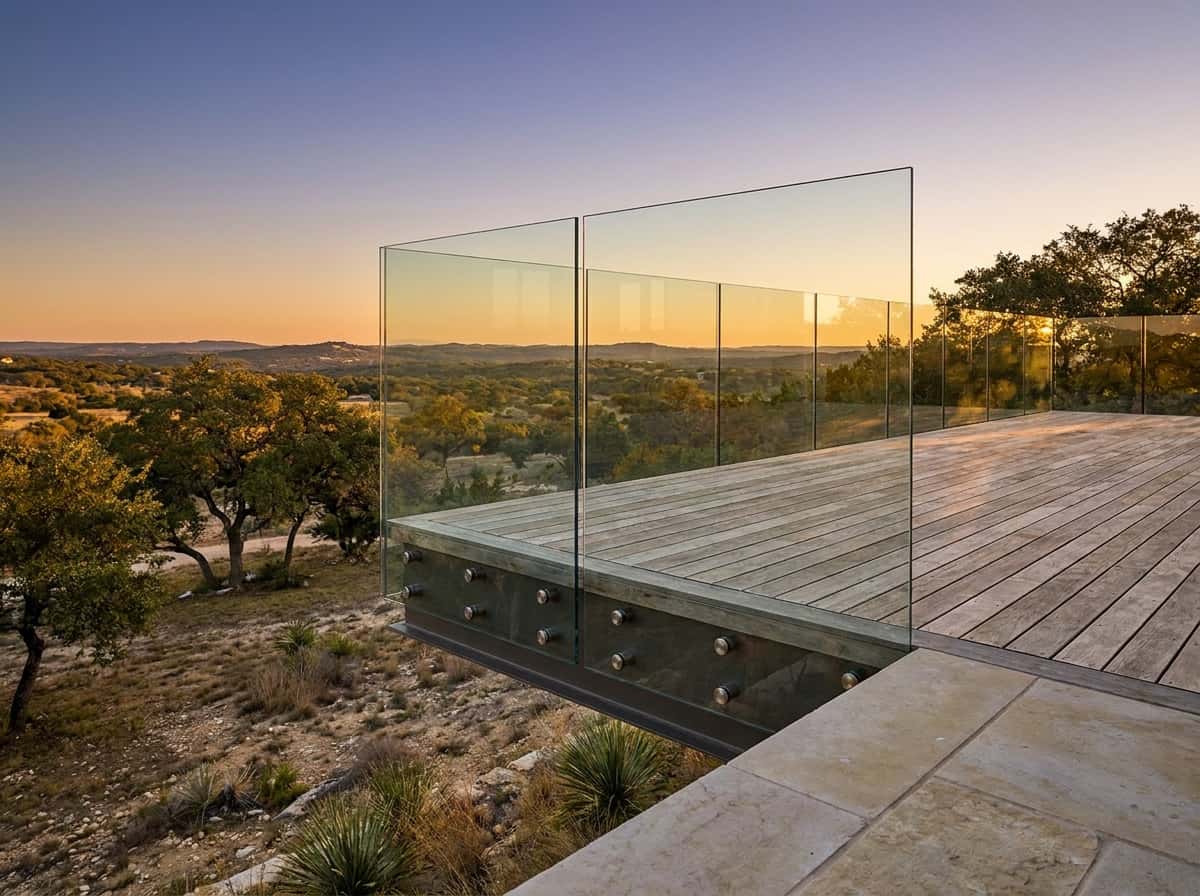
Frameless glass railing is a guard built from panels of thick tempered or laminated safety glass, held at the base or by discreet fittings, with no top rail or line of pickets breaking up the view. On an elevated deck, a balcony, or above a pool, it does the job a guard has to do — keep people from falling — while all but disappearing, so you keep the Hill Country view you built the deck for in the first place. It is the premium railing choice, and it is as much engineering as it is glass.
That engineering is the whole point. A guard has to resist real loads — people leaning on it, a crowd pressing against it — and glass only satisfies code when the panels, the fittings, and the anchoring are specified and installed as a system to carry those loads at the required height. We use safety glass rated for guard use, engineer the mounting to the structure, and detail it to the local building code, then install it as part of the same deck or balcony build. One crew engineers the structure and the railing together, so the glass always has something solid to anchor to.
Where frameless glass railing makes sense
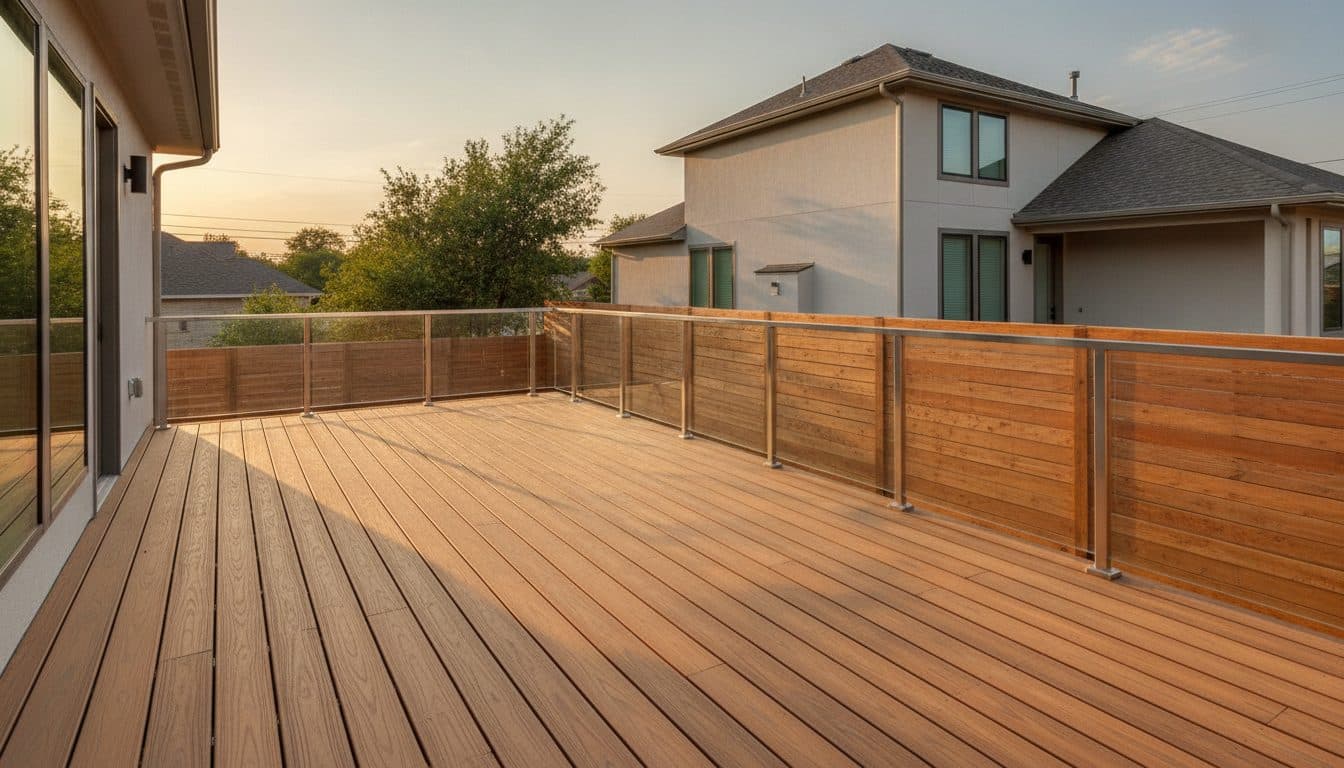
The case for glass is strongest exactly where the view is the reason you are outside — an elevated deck looking over the Hill Country, a second-floor balcony, or the edge of a pool where you want sightlines to the water and the kids in it. In those places a conventional railing of pickets or cable interrupts the very thing you are trying to see, and frameless glass removes that interruption while still guarding the edge.
It is not the right answer everywhere. On a very exposed, high-wind edge the glass acts as a solid wind-catch and the engineering has to account for it, and in some settings the cleanability and cost of glass are not worth it over a well-detailed metal or cable railing. We will tell you where glass earns its place and where a different guard serves you better.
How it meets code and carries load
A glass guard is not a decorative panel — it is a code-regulated safety element. Residential guards generally have to stand a set height above the walking surface and resist specified concentrated and continuous loads without failing, and a frameless system meets that only when the glass thickness, the fittings, and the anchoring are engineered together for the span and the exposure. This is why frameless glass railing is not a DIY item.
The glass itself is safety glass — tempered, laminated, or both — specified for guard use so a panel resists impact and, in the laminated case, holds together rather than falling away if it is ever broken. We engineer the mounting to the structure that carries it, whether that is a deck edge, a fascia, or a slab, and detail the assembly to satisfy the local building code and inspector.
What to expect on look and upkeep
The look you get depends mostly on how the glass is held. Standoffs read as an intentional hardware detail and give a floating panel; a base-shoe channel hides the fittings for the most minimal, uninterrupted line. Both come in a range of metal finishes, and the choice is as much about the style of your home as about the engineering.
On upkeep, the honest note is that glass shows water spots and fingerprints more than metal does, so plan on wiping the panels down to keep the view truly clear — that is the trade for keeping it unobstructed in the first place. The hardware itself is low-maintenance, and the glass will not rot, rust, or need refinishing the way a wood or painted railing eventually does.
Common questions
Yes, when it is engineered properly. It uses tempered or laminated safety glass and is mounted to meet the guard height and load requirements of the building code. Compliance comes from the whole assembly — glass, fittings, and anchoring specified together for the span — not from the glass alone, which is why we engineer and install it as a system.
Tempered or laminated safety glass rated for guard use, in thick panels sized to the span. Laminated glass holds together if it is ever broken rather than falling away, which is why it is often specified for guards. We select the glass type and thickness to suit the span, the exposure, and the local code.
It shows water spots and fingerprints more than a metal or cable railing, so plan to wipe the panels down periodically to keep the view clear — that upkeep is the trade for an unobstructed sightline. The hardware itself is low-maintenance and will not rot or rust the way a wood railing eventually does.
The railing has to anchor to a structure engineered to carry guard loads, so the edge framing or slab it mounts to matters. It is best planned together with the deck, but many existing decks and balconies can accept it after an assessment confirms the structure and mounting can handle the loads.