Deck Railing Ideas: Glass, Cable, Metal and Composite Compared
July 15, 2026
Deck railing ideas are easy to collect and hard to choose between, because the railing does two jobs at once: it keeps people safely on the deck, and it either frames your view or clutters it. A guard is required around any raised deck, but how it is filled — glass, cable, metal, composite, or wood — is a design decision, and the right one depends on whether you are protecting a Hill Country view or corralling kids and a dog.
Below we compare the five railing systems we build, honestly, including the budget-friendly options, and then cover the code realities — height, spacing, and load — that separate a railing that passes inspection from one that does not. Any of these can look custom when it is detailed and installed well; the differences are in sightlines, upkeep, and how each one suits your deck material and the style of your home.
Deck railing ideas at a glance: glass, cable, metal, composite and wood
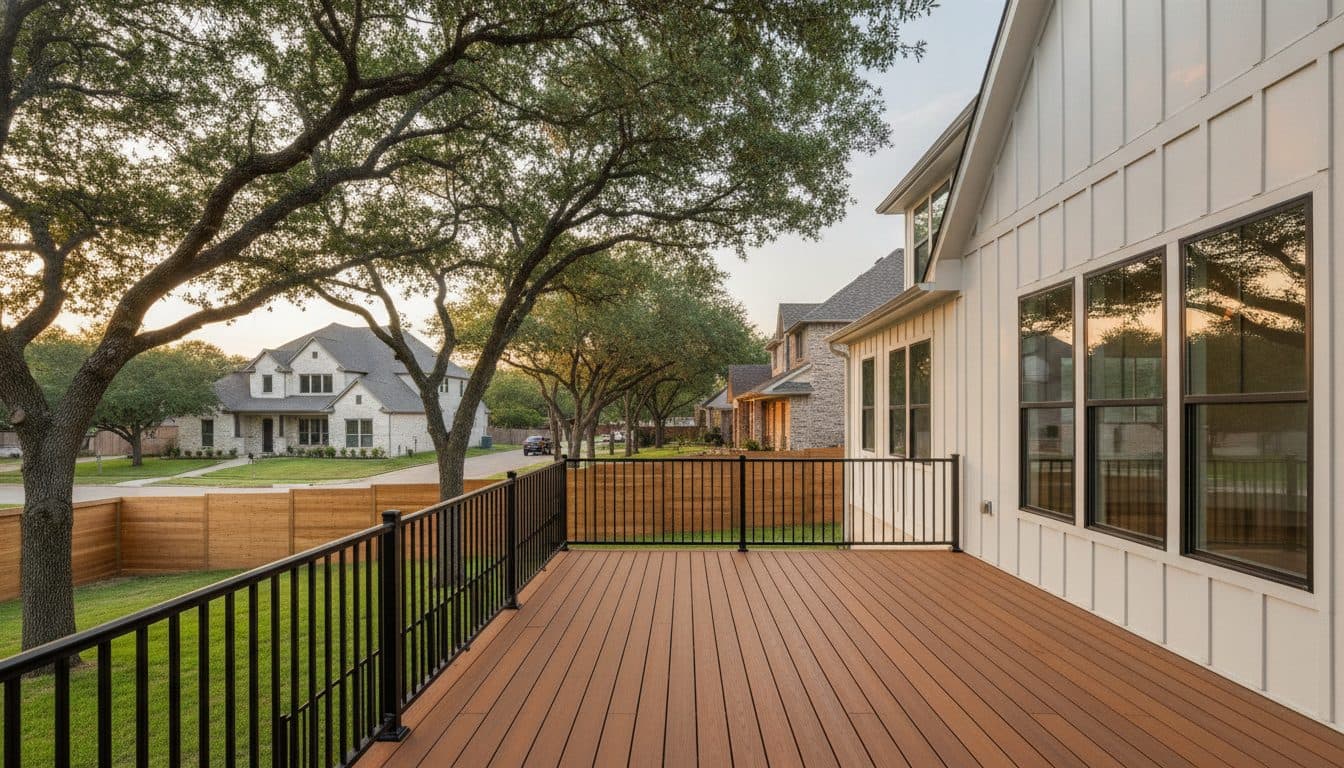
Most railings are built the same way — posts, a top rail, and an infill between them — and it is the infill that defines the look. Frameless glass gives an unbroken sheet you see straight through. Cable strings thin horizontal lines that nearly vanish. Metal balusters read crisp and traditional-to-modern depending on the profile. Composite and PVC match the decking for a coordinated, low-maintenance run. Wood is the warm, classic baseline you can dress up or keep simple.
The honest way to narrow the field is to ask what the deck is for. On a view lot, the priority is sightlines, which pushes you toward glass or cable. On a busy family deck, durability and easy cleanup often matter more than a perfectly clear view, which favors metal or composite. Budget, your deck material, and your home's style then decide between the finalists. The rest of this guide walks each option so you can weigh them against your own yard.
Frameless glass railing for unobstructed Hill Country views
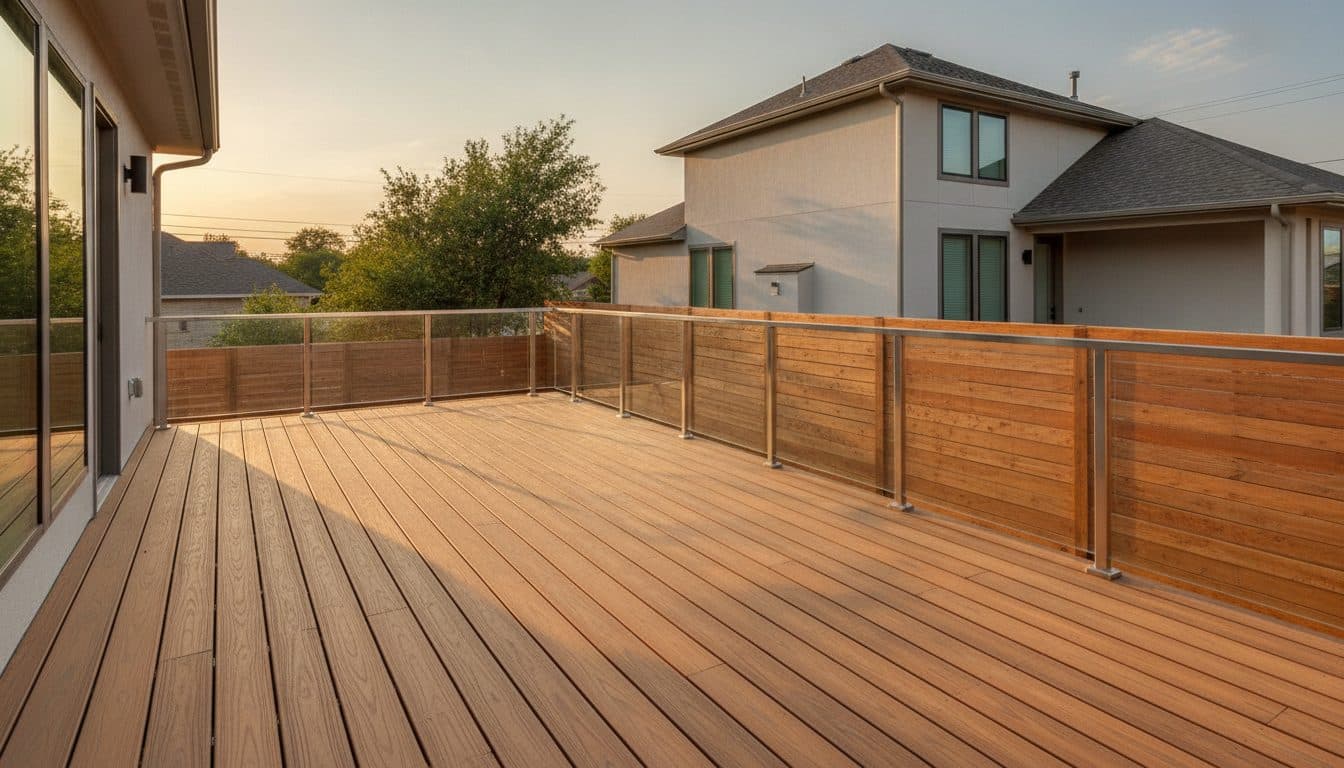
For an elevated deck with a real view, frameless glass railing is the premium answer. Panels of thick tempered or laminated safety glass guard the edge with no top rail or pickets breaking the line, so the Hill Country stays in frame from your chair. It is as much engineering as glass — the panels, fittings, and anchoring have to be specified as a system to carry guard loads at the required height — which is exactly why it is not a weekend project.
Two mounting styles set the look. Standoffs hold each panel with polished metal fittings for a floating, intentional-hardware detail; a base-shoe channel hides the fittings for the most minimal, uninterrupted line. The honest trade-off is cleaning: glass shows water spots and fingerprints, so you will wipe it down to keep the view clear. If you want the numbers behind it, our glass railing cost guide lays out what drives the price.
Cable railing: modern look, sightlines and maintenance realities
Cable railing runs horizontal stainless cables between posts, and it has become the default modern look for good reason: the cables are thin enough to nearly disappear, preserving sightlines almost as well as glass while costing less and never showing water spots. On a family deck or a contemporary home it reads clean and architectural, and it lets the breeze through rather than blocking it.
The maintenance reality is worth stating plainly. Stainless cable is low-maintenance, not no-maintenance — cables need proper tensioning at install and occasional re-tensioning over time, and the posts and framing have to be stiff enough to resist that tension without bowing. Code also governs how far apart the cables sit and how much they can deflect under a push, which is part of why a properly engineered cable run holds its lines where a snap-together kit often sags.
Composite, PVC and budget-friendly railing that still looks custom
If low upkeep is the priority, composite and PVC railing systems match the decking they sit on and shrug off the sanding, staining, and repainting that wood eventually demands. Ordering railing, fascia, and stairs from the same system as a composite deck is what makes the whole deck read as one material rather than a surface with a mismatched guard bolted on. The palette is broad, and the finish stays consistent for decades.
Budget-friendly does not have to mean basic. Powder-coated aluminum railing is durable, slim, and among the most affordable metal options; wood posts fitted with metal balusters or a few cable infills give a custom look for less than a full glass or all-cable run; and mixing systems — composite posts with aluminum balusters, for instance — stretches the budget while keeping the deck cohesive. The trick is clean detailing and installation, which is what makes an economical railing still look deliberate rather than cheap.
Texas code: height, baluster spacing and load requirements
Railing is where design meets the building code, and the code wins. Guards on a raised deck have to reach a minimum height above the walking surface, the infill has to be spaced so a small child cannot pass through it — the familiar rule that a sphere of a set diameter cannot fit between balusters or cables — and the whole assembly has to resist both a concentrated push and a continuous load without giving way. We build to the specific figures your jurisdiction enforces rather than to a rule of thumb.
Those requirements are also why not every railing idea works at every height. A deck raised above a certain distance from grade triggers the guard requirement in the first place, and higher or more exposed decks demand stiffer posts and closer spacing. Cable and glass in particular only satisfy the load rules when the posts, fittings, and framing are engineered together — the reason we design the railing with the deck rather than adding it at the end.
Matching railing to your deck material and home style
The last decision is fit — matching the railing to your deck material and the style of your home. A wood deck can carry a wood railing for a traditional, warm look, or a metal or cable infill for a lighter, updated one; a composite deck usually looks best with the coordinated composite or a metal railing from a compatible system. Glass suits contemporary and view-focused homes; black aluminum reads clean on nearly anything.
Beyond looks, match the railing to how the deck is used. A view lot rewards the sightline-preserving systems — glass or cable — while a busy family yard may be better served by a sturdy, low-maintenance metal or composite guard that takes abuse and cleans up with a hose. If you are weighing options for a specific deck, we are glad to walk the trade-offs on site; you can book a design consultation to start.
Common questions
Composite, PVC, and powder-coated aluminum are the most hands-off, needing little beyond an occasional rinse. Cable is low-maintenance but not zero — it needs occasional re-tensioning — and glass is durable but shows water spots, so it wants periodic wiping to stay clear. Metal and composite systems ask the least over the years.
Both preserve the view far better than pickets. Glass is the only truly unobstructed option but shows fingerprints and water spots and costs more; cable strings such thin lines that it nearly disappears at a distance, costs less, and never spots. Choose glass for a completely clear sheet, cable for a lighter, lower-upkeep look.
Guards on a raised deck must meet a minimum height above the walking surface, keep infill spaced so a small child cannot pass through, and resist specified loads without failing. The exact figures are set by your local code and inspector, and they vary with how high the deck sits. We build every railing to the requirements your jurisdiction enforces.
Powder-coated aluminum is usually the best value in a durable, slim metal guard. Wood posts with metal balusters, or mixing systems like composite posts with aluminum infill, also deliver a custom look for less. Clean detailing and proper installation are what keep a budget railing from reading as an afterthought.