Outdoor Kitchens
Blaze, Coyote, Bull, and Big Green Egg built-ins on masonry islands — with the gas, water, and electrical done right.
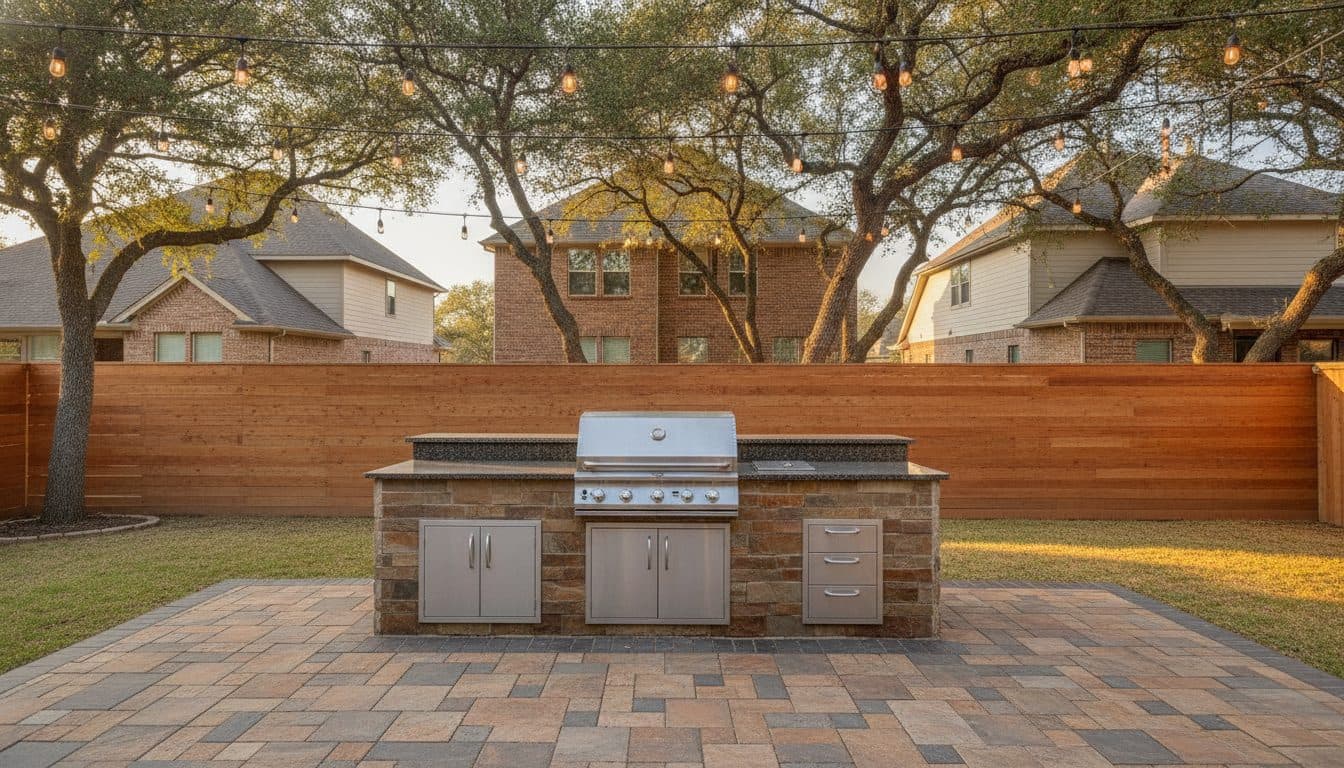
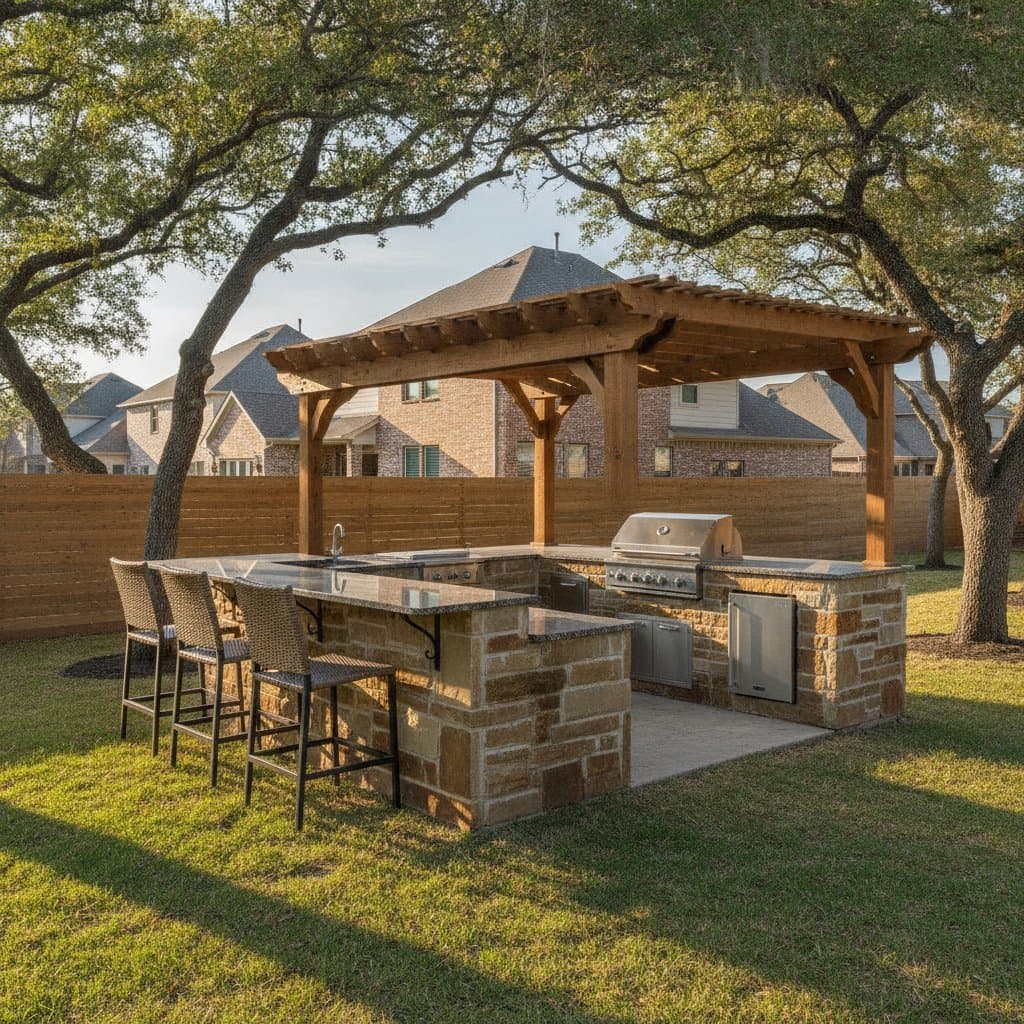
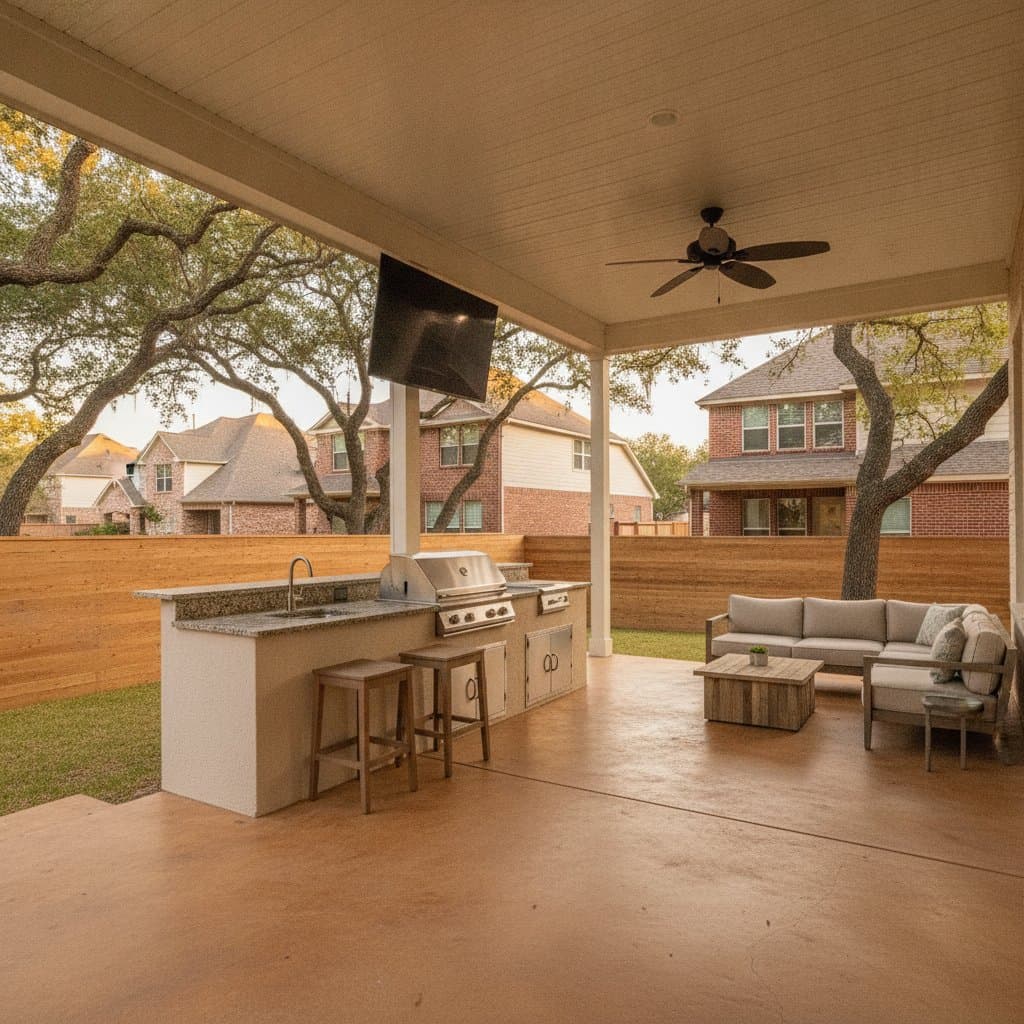
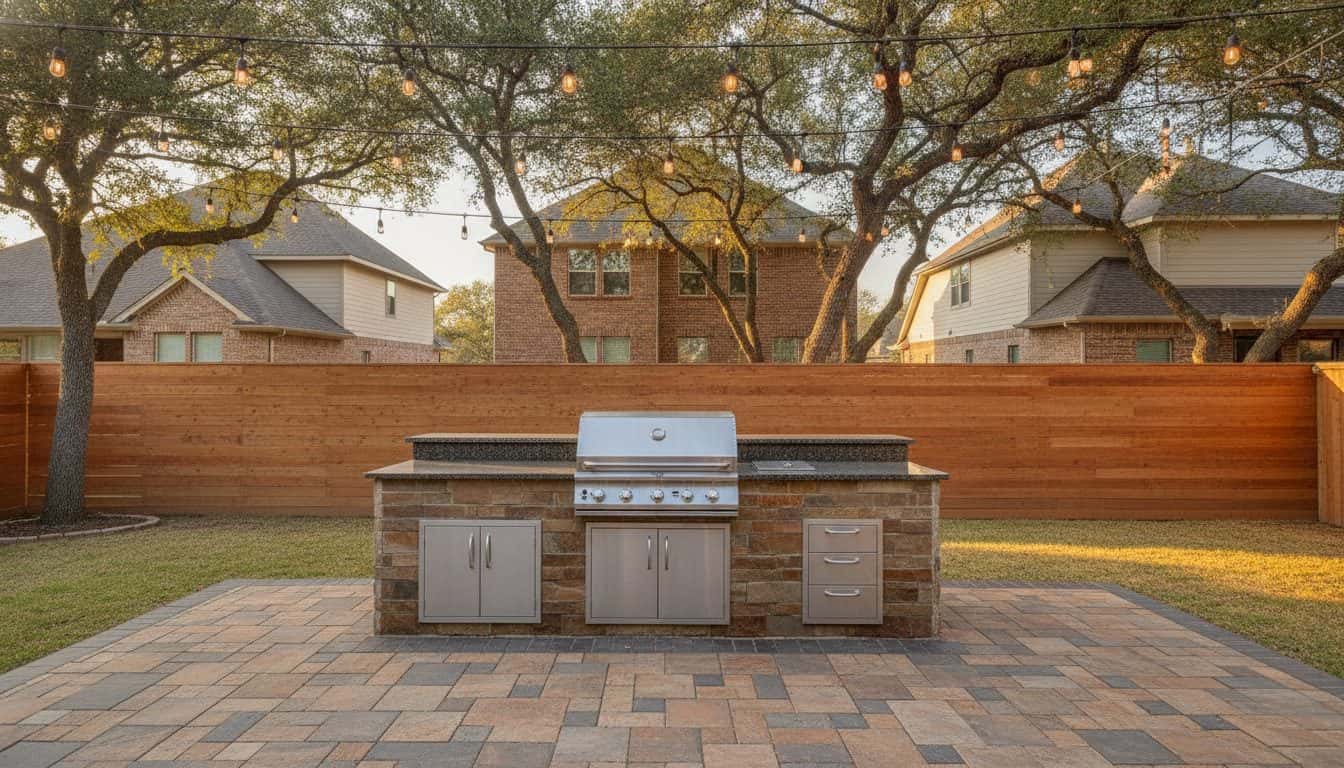
An outdoor kitchen is a built structure, not a rolling cart parked on the patio. At its core is a masonry island that houses a built-in grill and whatever else you cook with, wrapped in a durable counter and finished to match the house. What separates a kitchen that lasts from one that fails early is what you cannot see: the gas line sized for the burners, the drainage under the sink, the electrical for refrigeration and lighting, and an island built to carry the weight of stone.
We build the island and run the utilities as one job, so the grill, side burner, refrigerator, and lighting all have the fuel and power they were specified for. Gas is sized and connected to code, water and drainage are roughed in before the counter goes on, and electrical is placed where the appliances actually sit. Built-in appliances are set into a non-combustible masonry surround with proper clearances, which is what keeps the heat where it belongs and the structure sound over years of Texas summers.
How we build an outdoor kitchen
Every kitchen starts with a footing and a framed island, usually a steel or block core, because stone, appliances, and a counter add up to real weight that a patio slab alone was not poured to carry. With the shell up, we rough in the utilities: a gas line sized to the total burner load, water supply and drainage for the sink, and electrical circuits for refrigeration, outlets, and lighting. Each of these is placed against the appliance layout, not guessed at, so nothing has to be chased later.
The built-in appliances then drop into non-combustible openings with the manufacturer's required clearances, the counter is templated and set, and the island is faced in stone or stucco. Doing the structure, utilities, and finish as one job is what keeps the seams tight and the connections to code. A grill dropped into a hollow wood box with an undersized gas line is the common failure we are built to avoid.
What Texas heat and weather ask of an outdoor kitchen
Sun and heat are hard on outdoor appliances and finishes. Stainless steel should be an outdoor-rated grade so it does not pit and rust, and refrigeration has to be an outdoor unit, since indoor models struggle to hold temperature and fail early in the heat. Countertops take direct sun, so a heat-tolerant surface like granite holds up where softer materials can stain, scorch, or fade.
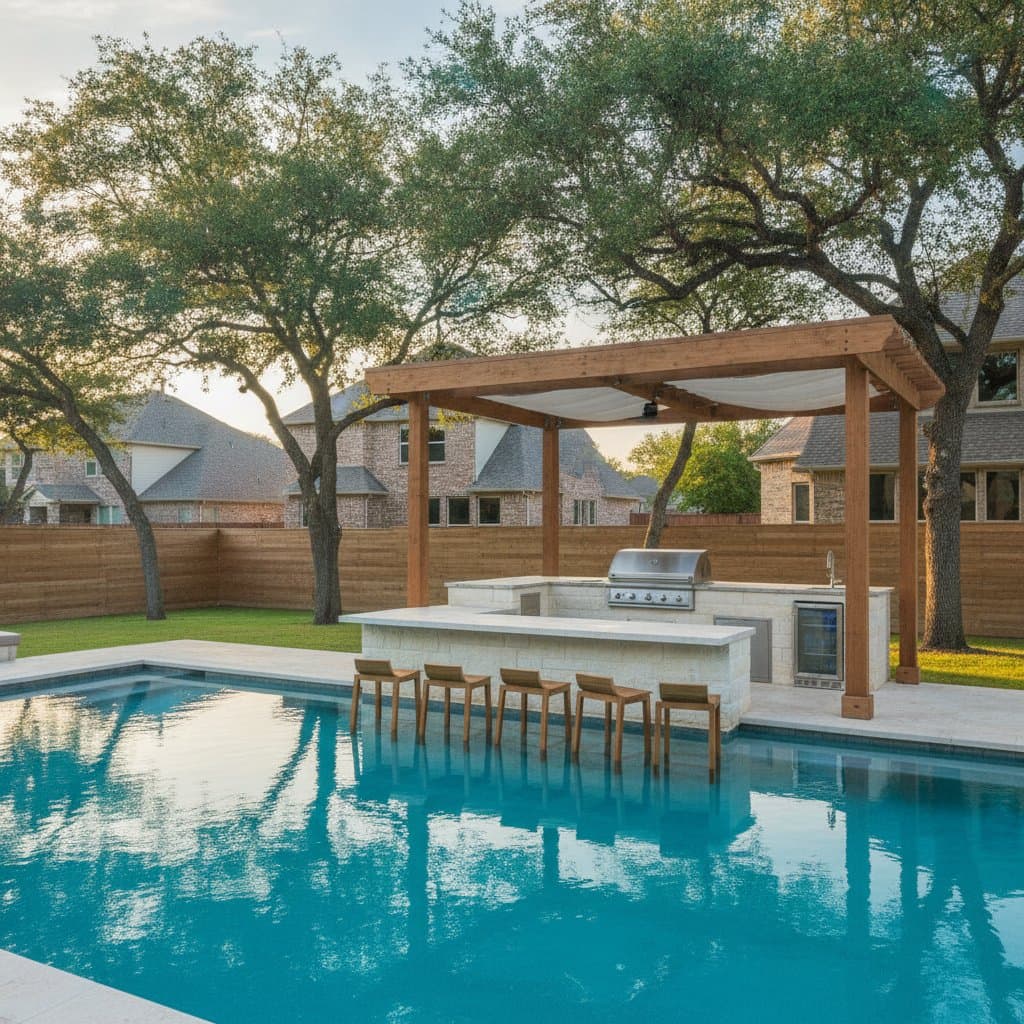
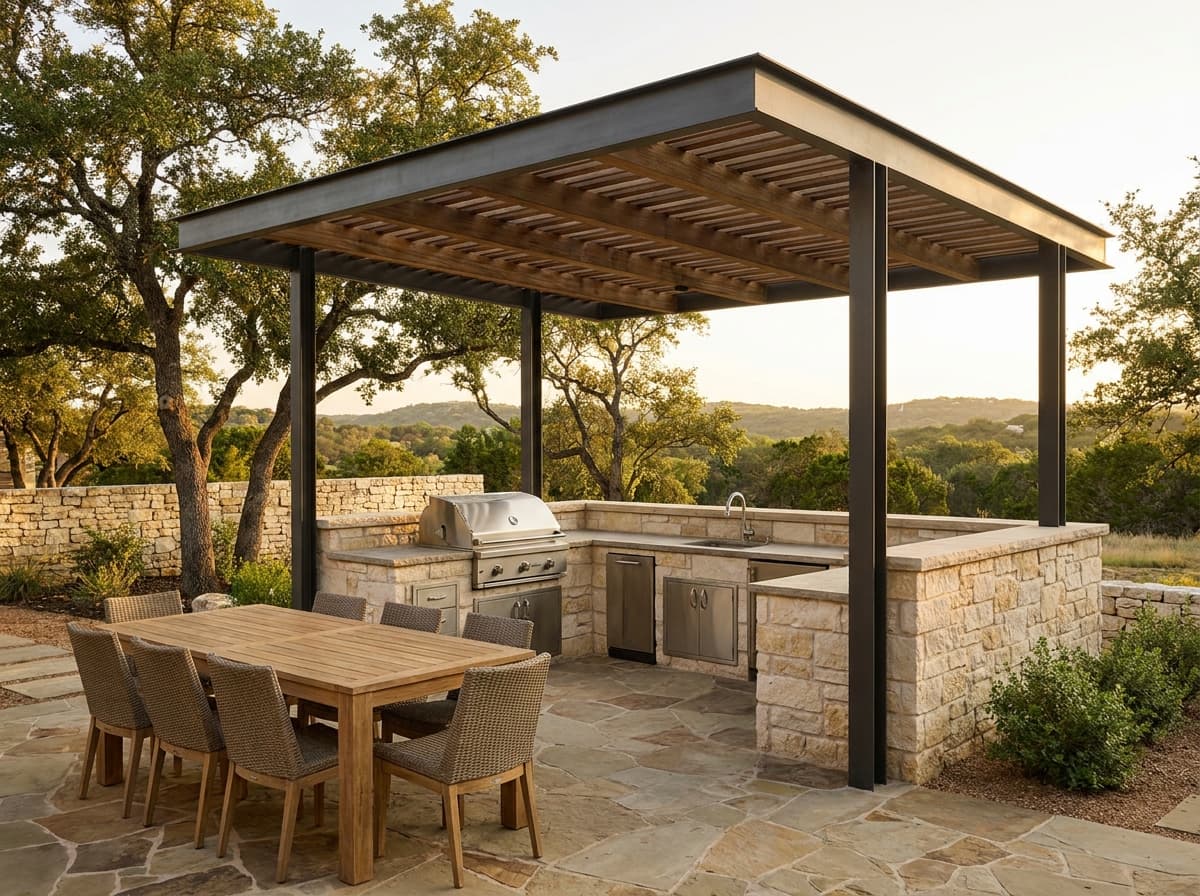
The masonry itself has to move with our expansive clay soils. A properly footed island resists the seasonal shrink and swell that cracks understructured stonework, and a little roof or shade over the kitchen goes a long way toward keeping both the cook and the appliances comfortable through an Austin summer. Where a shade structure is part of the plan, we set the kitchen and its utilities to work with it.
Common questions
Both work. Many kitchens run on natural gas tied into the home's supply, which means never swapping a tank, while others use propane where a gas line is impractical. Either way the line and regulator have to be sized to the combined burner load of every appliance, which is why the fuel is planned around the specific grill and burners you choose.
Granite is a common choice because it tolerates heat and direct sun and resists scratching, and locally quarried Lueders limestone is popular for a lighter, native look. The key in our climate is a dense, sealed stone that will not fade or stain under constant UV, rather than an indoor material moved outside.
Sometimes, but not always. A standard four-inch patio slab is not poured to carry a stone-faced island full of appliances, so we assess the existing concrete and often add a footing or a dedicated pad. Building the island on structure it was not designed for is a frequent cause of cracking and settling later.
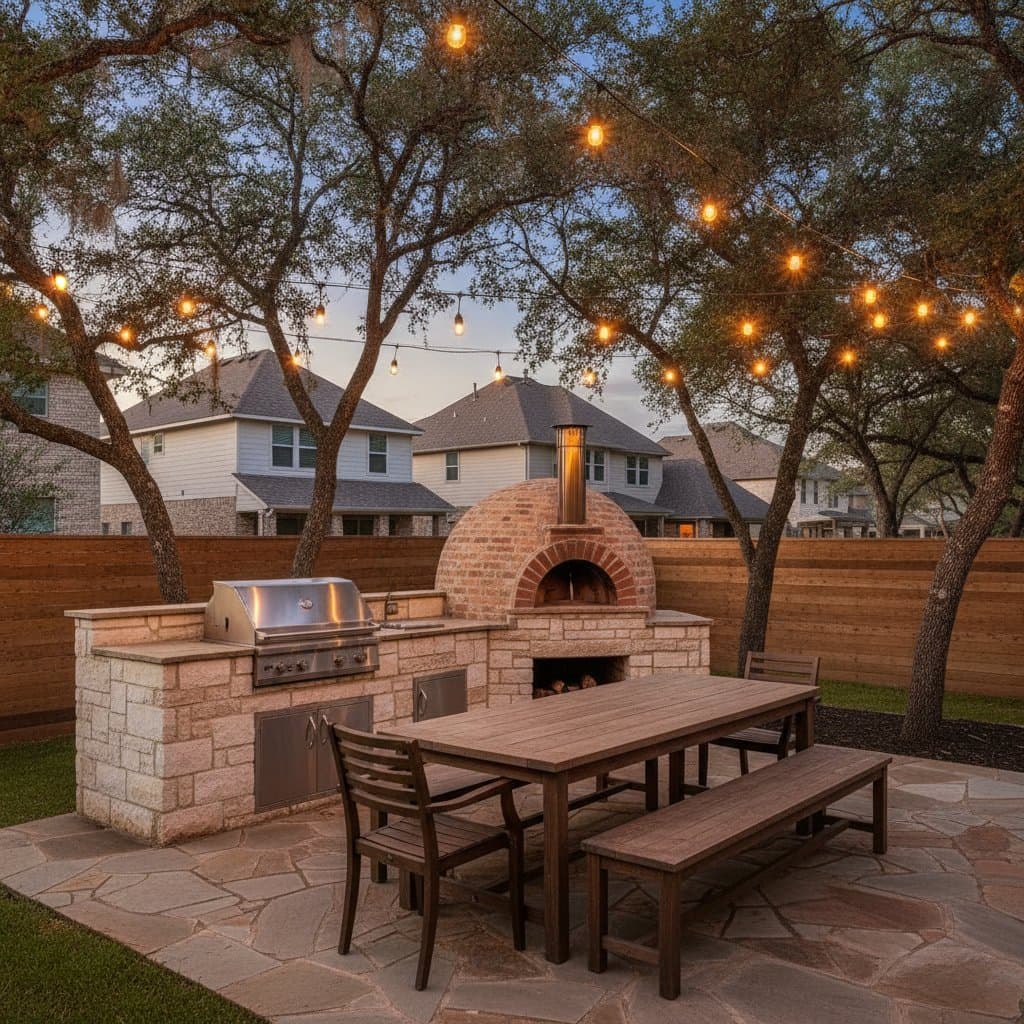
The grill, side burners, and any kamado or griddle are set as built-ins so they are integrated, ventilated, and clear of combustibles. Refrigeration, storage drawers, and access doors are also built into the island as outdoor-rated units. Small items can stay portable, but anything that produces heat or needs a utility connection belongs designed into the structure.