Pergola vs. Gazebo vs. Pavilion: Which Backyard Structure Is Right for You?
July 15, 2026
If you have started shopping for a backyard structure, you have probably run the same search everyone else in Austin runs: pergola vs gazebo, and then pergola vs pavilion, and maybe arbor and awning for good measure. The terms get used loosely at the big-box store, but they describe genuinely different structures that solve different problems. Getting the difference right up front saves you from buying a good-looking structure that does not do the job your yard actually needs it to do.
Here in Central Texas the deciding factors are not really style — they are sun angle, storm and hail exposure, permitting, and how the structure holds up over a decade of relentless heat. We design and build all of these as engineered, permitted structures, from open-slat pergolas to solid-roof pavilions to motorized louvered roofs, so we can walk you to the right one instead of selling you the one we happen to stock.
Pergola, gazebo, pavilion and arbor: what each structure actually is
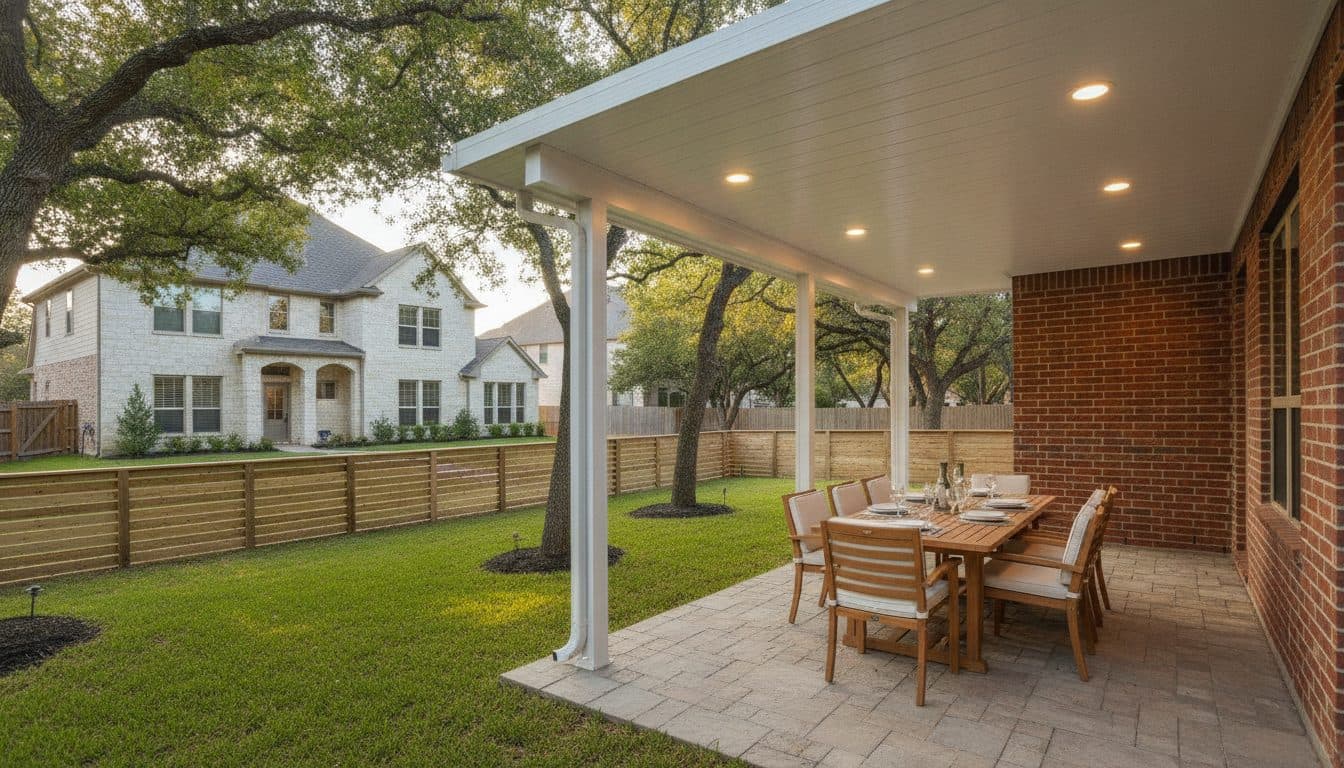
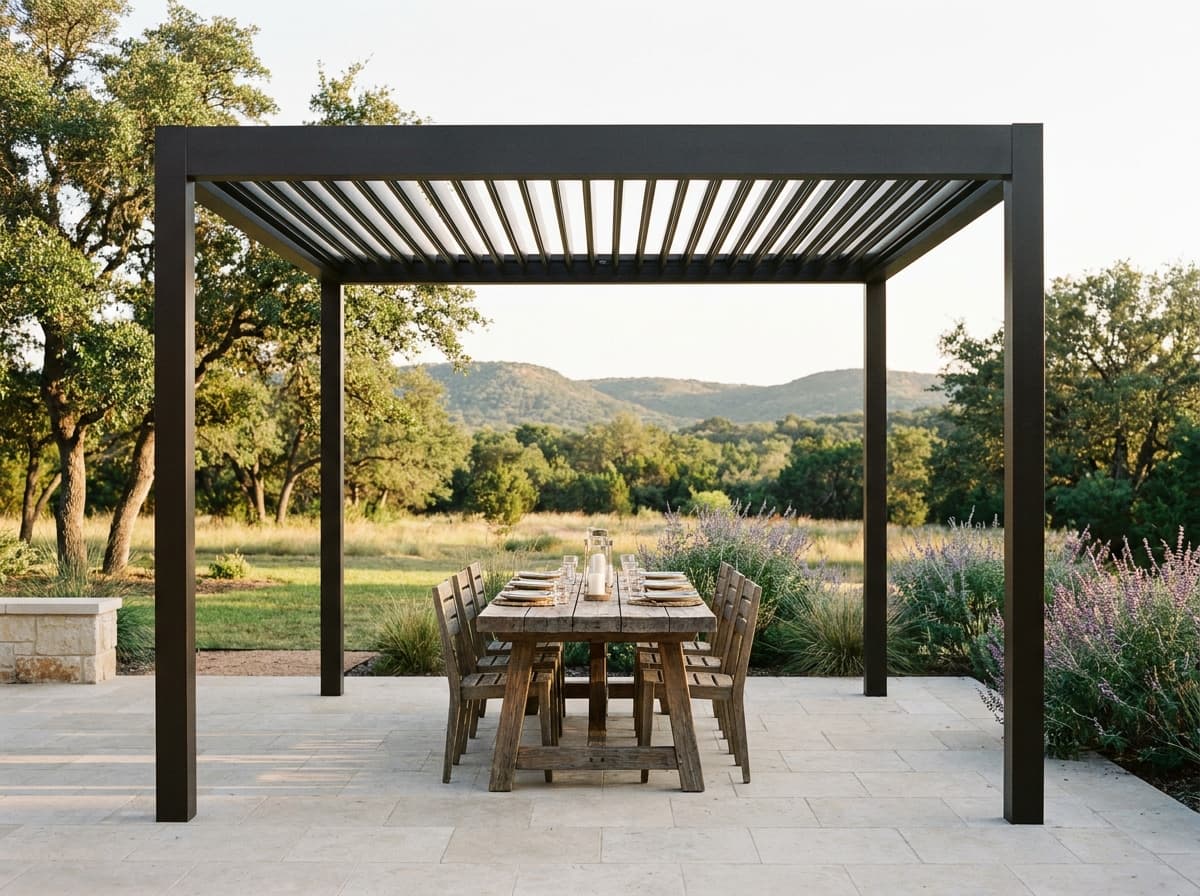
A pergola is an open shade structure: posts carrying beams and rafters or slats that filter the sun without sealing out the sky. It casts pattern shade and hosts climbing plants, a stretched canopy, or a shade sail, but on its own it does not keep off rain. We build wood and steel pergolas sized for the span and anchored for local wind, which is the detail that matters most on an open structure.
A gazebo is a freestanding, usually octagonal or round structure with a solid, peaked roof and often a built-in floor, a railing, and sometimes screens. It reads as a destination — a defined spot in the middle of the yard rather than an extension of the house. A pavilion is closer to an open-air room: a larger rectangular footprint under a solid pitched roof, open on the sides, meant to shelter a full seating area, an outdoor kitchen, or a dining table.
An arbor is the smallest of the family — a narrow overhead structure, often arched, that marks a gateway or supports vines rather than shelters a seating area. An awning is a fabric or metal shade fixed to the wall of the house, not a standalone structure at all.
Shade and weather protection: pergola vs gazebo and solid-roof structures
The single biggest split is open versus solid roof. An open pergola or arbor filters sunlight into dappled shade but lets rain through and does little against a high midday sun. A gazebo or pavilion, with its solid peaked roof, gives you dry, genuine shelter you can count on in a downpour or on a hard July afternoon. If your goal is a space usable in any weather, a solid roof wins outright.
That said, a solid roof is not free of trade-offs: it blocks the sky entirely, so the space underneath is darker and can trap heat without good airflow and ceiling fans. An open pergola keeps the space bright and breezy but asks you to add a canopy or plantings for real shade. Many homeowners land in the middle, which is exactly where the adjustable option comes in.
The adjustable option: how a motorized louvered pergola beats a fixed gazebo
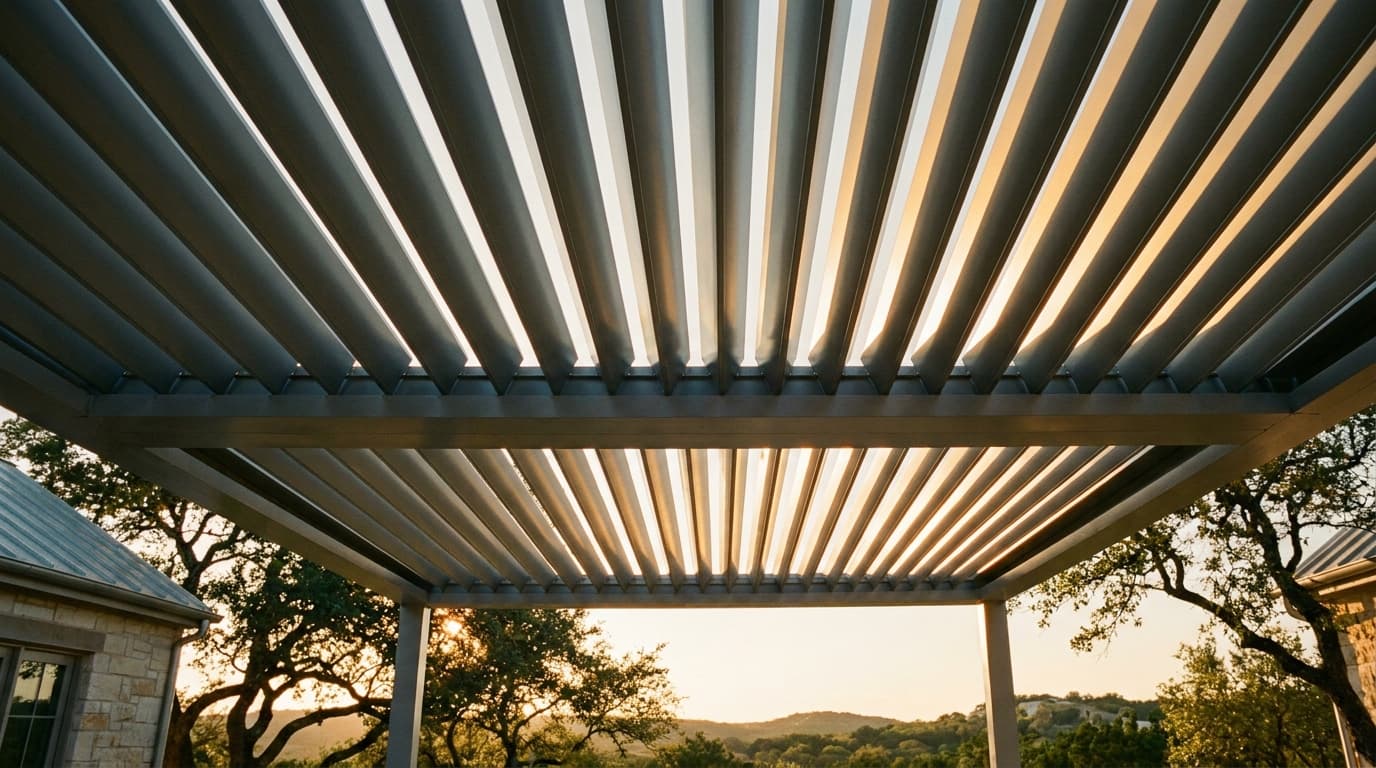
There is a fourth structure that most comparison articles leave out because it did not exist a generation ago: the motorized louvered pergola. Its roof is a set of aluminum blades that rotate from fully open to fully closed, so one structure gives you open sky, filtered shade, or a sealed roof that sheds rain into gutters hidden in the frame. It is the only option that changes with the weather and the time of day instead of committing you to one condition.
As the Preferred StruXure Dealer for Austin, we install these as engineered, permitted structures with the drainage and anchoring done properly. Against a fixed gazebo, the louvered roof wins on flexibility: full sun in the cool morning, closed shade at the peak of the afternoon, and a dry roof when a storm rolls in. If you want to understand where a fixed roof still makes sense, our louvered versus fixed pergola comparison breaks down the trade-offs.
Cost drivers, permits and HOA approval in the Austin area
Cost tracks with size, roof type, and materials more than the label on the structure. An open pergola uses less material than a solid-roof pavilion of the same footprint, and a motorized louvered roof carries the engineering and the mechanism, so it sits at the top. Permitting is the part homeowners underestimate: a permanent, footed structure typically requires a permit in the Austin area regardless of what you call it, and attaching one to the house can add requirements.
We handle the stamped engineering and pull the permit as part of the build rather than leaving it to you — skipping it is how a structure becomes a problem at resale or after a storm. Then there is the HOA. Many Central Texas neighborhoods require architectural review before you build anything visible in the backyard, and approval can hinge on roof style, height, color, and setbacks, so start that review early. We are glad to provide the drawings most committees ask for.
Durability in Texas sun, heat and hailstorms
Texas is hard on outdoor structures in three specific ways: unrelenting UV, wide temperature swings, and the occasional hailstorm. Bare wood in this sun needs re-sealing on a cycle to hold its color and resist checking, whether it is a pergola or a wood pavilion. Go in knowing the upkeep — a cedar structure rewards it with real warmth and character.
Aluminum and steel change the equation. Powder-coated aluminum, as in a louvered roof or an insulated patio cover, holds its finish under UV and shrugs off rot and insects. Engineered steel spans farther with slimmer members. On hail, a solid metal roof takes an impact that would tear a fabric canopy, and a louvered roof can be closed ahead of a storm. Anchoring is the shared non-negotiable — every open structure is a sail on posts, and the footings and connections are what keep it standing.
How to choose based on your yard, budget and how you entertain
Start with orientation and use. A west- or south-facing yard bakes in the afternoon, which pushes you toward a solid or adjustable roof. If you entertain large groups and want a covered dining or kitchen area, a pavilion or a louvered roof gives you the sheltered footprint; if you want to define a quiet corner or dress up a garden path, a pergola or arbor is the lighter, less expensive move.
Then weigh maintenance against flexibility. If you want the space usable in any weather with the least fuss, aluminum and a solid or louvered roof earn their cost; if natural material and a lower entry price matter more, a wood pergola or pavilion is the answer, with the sealing cycle as the trade. When you are ready to price your specific yard, our instant estimate tool gives you a ballpark range in a few minutes.
Custom-built vs. kit: what it means for warranty and resale
A big-box kit is tempting on price, but it is engineered for an average yard, not yours. Kits arrive with generic anchoring, fixed dimensions, and no accounting for Central Texas clay soil or local wind loads, which is why so many end up leaning, cracking, or pulling loose within a few seasons. When they fail, the warranty usually covers the parts, not the labor or the damage, and there is no local team to call.
A custom, engineered structure is sized for your span, footed for your soil, and permitted and inspected to code. That matters at resale, because a permitted, professionally built outdoor room reads as a real improvement to an appraiser and a buyer, while an unpermitted kit can raise questions. It is also the difference in warranty: we stand behind the build locally rather than pointing you to a manufacturer's parts desk. If you would rather talk it through, you can book a design consultation and we will walk your yard.
Common questions
A pergola is an open structure with a slatted or rafter roof that filters sun and lets rain through, while a gazebo has a solid, peaked roof and an enclosed, usually round or octagonal footprint that provides full shelter. A pergola extends and frames a space; a gazebo is a standalone destination. Which fits depends on whether you want dappled shade or dry, all-weather cover.
A pavilion's solid roof blocks the midday sun and keeps a seating or dining area dry, which suits a west- or south-facing yard that bakes in the afternoon. An open pergola stays brighter and breezier but needs a canopy or plantings to shade well. A motorized louvered roof gives you both, opening for sun and closing for shade or rain.
Usually, yes. A permanent, footed pergola, gazebo, or pavilion typically requires a permit in the Austin area, and many neighborhoods also require HOA architectural review. We provide the stamped engineering, pull the permit, and supply the drawings a review committee asks for as part of the project.
Kits win on upfront price but are built to generic dimensions with anchoring that does not account for local soil or wind, so many lean or loosen within a few seasons. A custom-engineered structure is sized, footed, and permitted for your specific yard, and it carries a local warranty and reads as a real improvement at resale.