Paver Patios & Hardscaping
Belgard paver patios, walkways, retaining walls, and stone columns — the floor of your outdoor room.
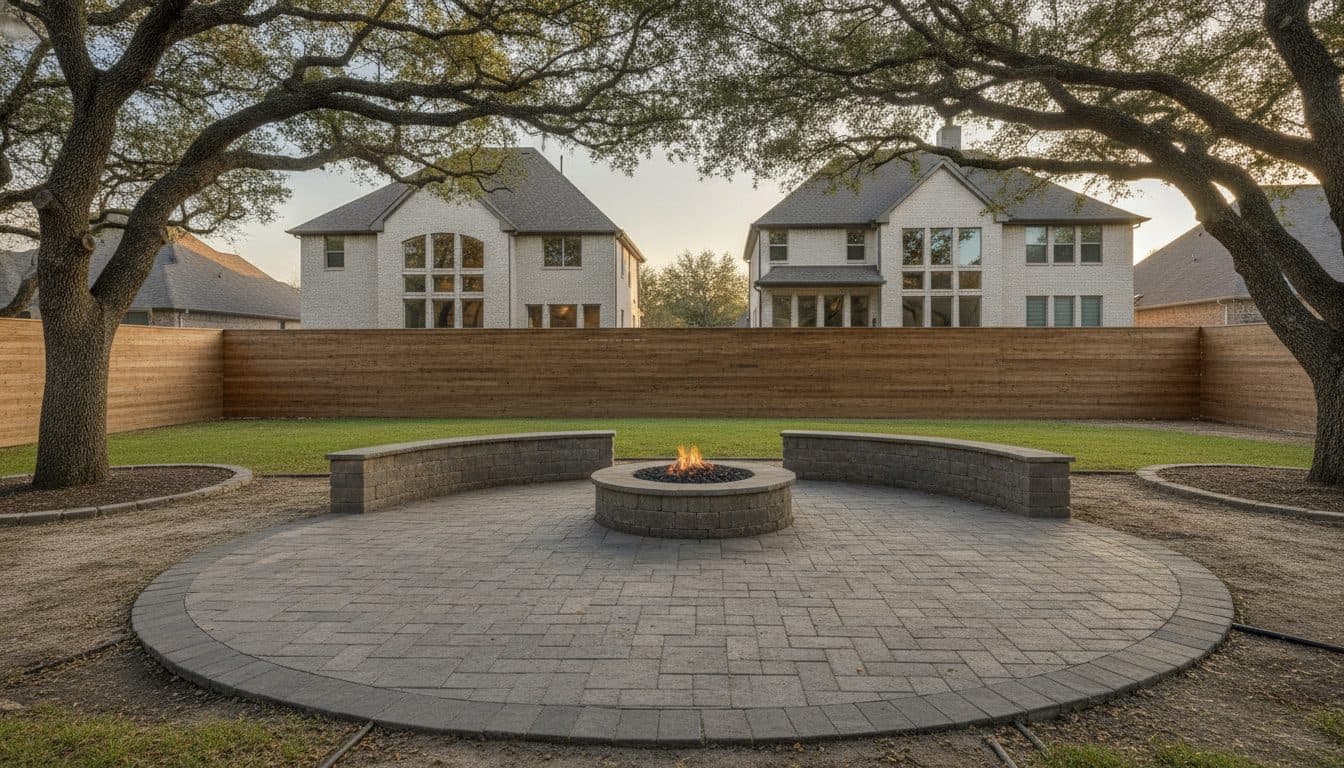
A paver patio is a surface built from individual units, concrete or porcelain pavers, set over a compacted, layered base rather than poured as one slab. Done right, that base is the entire job: the pavers themselves are the easy part. Because the surface is made of many pieces on a flexible foundation, it moves with the ground instead of cracking across it, and a single stained or broken paver can be lifted and replaced without touching the rest. It is the floor the rest of an outdoor room stands on.
We install Belgard pavers, and the craft is in what goes underneath: excavation to the right depth, a compacted aggregate base built up in lifts, a bedding layer screeded flat, and edge restraint that locks the field in place so it does not spread over time. Joints are filled and the surface is sloped to move water away from the house. We build the same way for walkways, retaining walls, and stone columns, so the hardscape reads as one continuous piece of work rather than a patio with add-ons.
The base is the job
The single thing that decides whether a paver patio lasts is the base beneath it, and it is the part no one sees. We excavate to a depth set by the soil and the use, then build a compacted aggregate base in layers, compacting each lift so the whole thing carries load without settling. On top of that goes a thin, screeded bedding layer that the pavers set into, followed by edge restraint around the perimeter that keeps the field from creeping outward over the years.
Skimping anywhere in that stack is what produces the sunken, uneven paver patios people warn each other about. A surface laid on too little base, or on soil that was not compacted, telegraphs every soft spot within a season or two. Because we build the base to the load and slope it for drainage, the finished surface stays flat and sheds water instead of pooling against the house or heaving in the middle.
Pavers and Central Texas soil
Our expansive clay soils shrink in drought and swell after rain, and that constant movement is exactly what cracks a rigid concrete slab. A paver surface has an advantage here: because it is many units on a flexible base, it flexes with the ground instead of fracturing, and any settling can be corrected by lifting and re-leveling the affected area rather than replacing a slab. That repairability is a real benefit in a climate this hard on hardscape.
Drainage is the other half of building for our soil. Water that collects under a patio keeps the clay swelling and shrinking unevenly, so we grade the base to carry water away and, where needed, build in drainage before the pavers go down. Getting the water right at the base stage is far cheaper than chasing a low, wet corner after the surface is finished.
Common questions
Each has its place. Pavers cost more up front but flex with our expansive soils instead of cracking, and individual units can be lifted and reset if the ground moves or one stains. A poured slab is more economical and gives a seamless surface, but a crack in it is permanent. In shifting clay, many homeowners prefer the repairability of pavers.
Only when the base is undersized or poorly compacted. A patio built on a properly excavated, compacted aggregate base with edge restraint stays flat for the long term. When pavers do settle, it almost always traces back to the base, which is why the foundation work matters far more than the pavers laid on top of it.
Modern jointing materials, including polymeric sand that hardens in the joints, greatly limit weed growth and keep the joints from washing out. Weeds that do appear generally sprout from windblown seed sitting on the surface rather than from below. Kept swept and topped up as needed, a well-built paver patio stays largely weed-free.
In some cases, yes: if the slab is sound and drains properly, pavers can be set over it. More often we assess the existing concrete first, because laying over a cracked or poorly draining slab simply passes those problems up to the new surface. Whether to overlay or start from a proper base is a judgment made on site.