Lanai vs. Patio vs. Porch: What Each One Is (and Which Fits a Texas Backyard)
July 16, 2026
Search "what is a lanai" and you will find as many answers as there are regions that use the word. A lanai is a roofed, floored outdoor living space attached to the house. The term comes from Hawaii, where it means a covered porch or veranda, and it traveled to Florida for screened-in patio rooms tucked under the main roofline. In Texas, most people who say lanai simply mean a covered patio they can furnish and live on through the year.
The trouble is that lanai, patio, porch, and veranda get used interchangeably at the home store and in listings, even though each describes a different piece of the house. Knowing which one you actually want changes the budget, the permit, and whether the space survives a Central Texas summer. This guide sorts the terms out plainly, then gets to the part that matters here: which of them earns its keep in the heat, the sun, and the cedar pollen.
What a lanai is, and what Texans usually mean by it
The word lanai is Hawaiian, and in its home state it describes a covered porch or veranda built into the house: a shaded, floored room open to the air on at least one side, where the line between indoors and outdoors is deliberately blurred. The term spread through Florida, where a lanai usually means a screened patio enclosure under the roofline, often wrapping a pool. Both share one idea, a permanent roofed outdoor room that is part of the house rather than a detached structure in the yard.
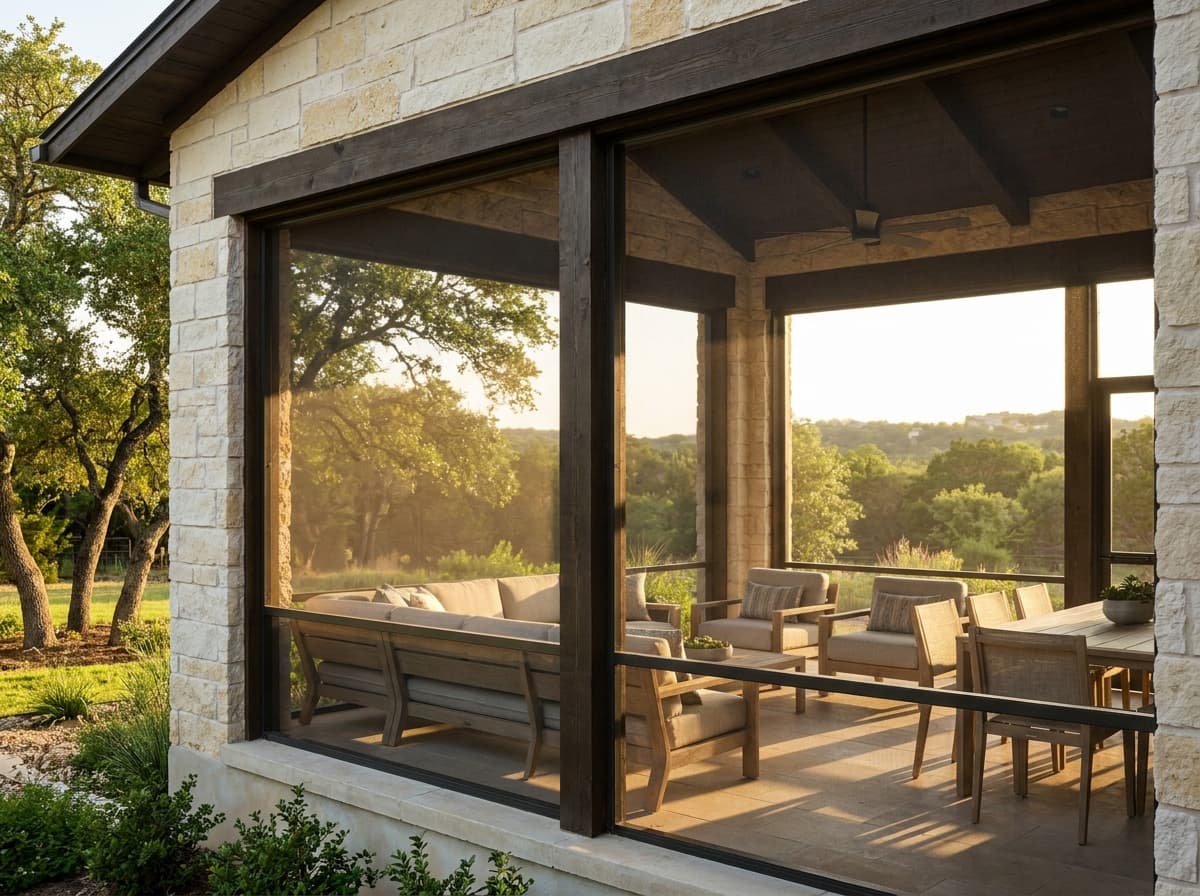
In Central Texas almost no one builds to a strict Hawaiian or Florida definition, so lanai here is really a style word for a covered, finished patio you can live on. When a Texas homeowner says they want a lanai, they usually mean a patio cover with a proper ceiling, fans, lighting, and maybe screens, an outdoor room that feels built rather than tacked on. Call it a lanai or a covered patio; the thing you are describing is the same, and it is very buildable here.
Lanai vs. patio: roofed room versus open slab
A patio, in the plainest sense, is a paved ground-level surface of concrete, pavers, or stone, with no roof over it. It is the floor, and nothing more. A lanai is that floor plus a permanent roof, a finished ceiling, and usually a tie-in to the house, so it reads as a room. Every lanai sits on a patio; not every patio is a lanai. The roof is the whole difference, and in this climate it separates a space you use three seasons from one you use all year.
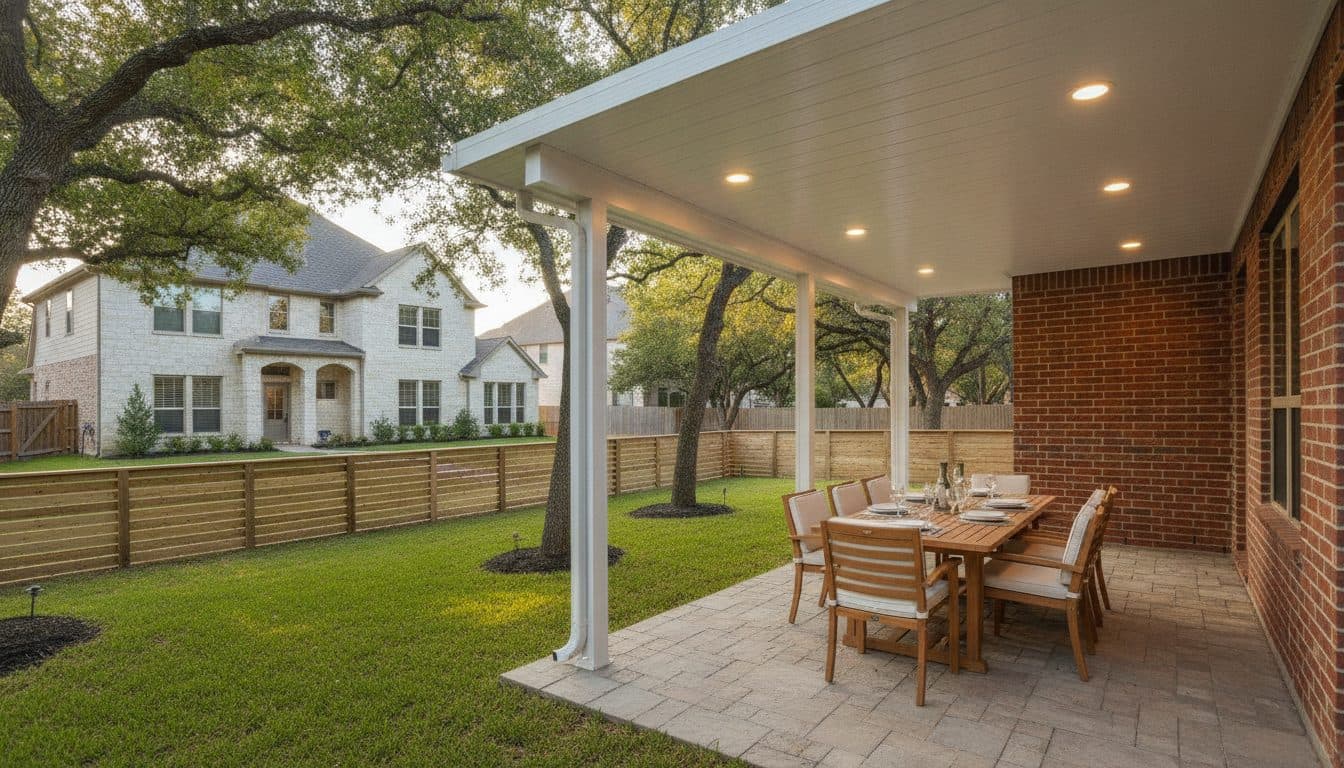
That is why the upgrade path in most Texas backyards runs from bare patio to covered patio. An open patio is cheaper and quicker, and it is the right call if you want sun for a garden bed, a fire feature, or a pool deck. But if you want to sit outside at two in the afternoon in July, or eat dinner during a rain shower, the roof is not optional. A lanai, a covered and ceilinged patio, is what makes the slab usable in the weather that otherwise keeps people indoors.
Porch vs. patio: where the house ends
Porch versus patio comes down to where the structure sits and whether it is roofed. A porch is attached to the house and covered, built on the same foundation and usually entered straight from a door, a front porch or a back porch under the home's own roofline. A patio is a separate paved area on grade, off to the side or the back, open to the sky unless you build a cover over it. A porch is architecture; a patio is landscape.
A screened porch is a porch with the openings screened in, which in Texas is less about looks than survival: it keeps out mosquitoes, wasps, and the cedar pollen that blankets everything each winter, while still letting the breeze through. It is one of the most requested outdoor rooms we build, because it turns a covered porch into a bug-free living space for most of the year. If you are weighing that route, our screened porch cost guide lays out what drives the number.
Veranda, gazebo, and pergola: the adjacent terms, sorted
A few more words orbit this topic and cause the same confusion. A veranda is a roofed, open-air gallery that runs along one or more sides of the house, often wrapping a corner, the long covered walkway you picture on a Hill Country farmhouse. Functionally a veranda is close to a lanai or a deep porch; the word just carries a more traditional, wraparound connotation. If it is attached, roofed, and open at the side, veranda and covered porch describe nearly the same thing.
A gazebo and a pergola, by contrast, are freestanding structures out in the yard, not part of the house. A gazebo is an enclosed, solid-roofed pavilion, usually round or octagonal, a destination you walk to. A pergola is an open framework of posts and beams that filters sun rather than blocking it, unless it carries a solid or louvered roof. None of these is a patio or a lanai; they are objects in the landscape. If your goal is a roofed room off the back of the house, a covered patio or porch is the family you want, not a gazebo.
Which one fits a Central Texas backyard
The Central Texas climate does most of the deciding. An open patio is glorious for about six weeks in spring and six in fall; the rest of the year it is either too hot to sit on or dusted in pollen. Add a roof and you extend that window dramatically, giving you shade at the worst of the afternoon and a dry seat when a storm blows through. For a lot of homeowners, the covered version is the one that actually gets used.
Where bugs and pollen are the problem, screening earns its cost. A screen room, a covered patio with the openings screened, or fitted with motorized screens that drop only when you want them, keeps the space livable through mosquito season and cedar season without walling it off. Take it a step further, enclose it with glass and climate control, and you have a sunroom: a true indoor-outdoor room you use in January. Open patio, screened room, sunroom is the spectrum, and where you land depends on how much of the weather you want to keep out.
What each one costs to build here
Cost climbs with how enclosed and finished the space is, not with the label on it. A bare patio is the least expensive, since it is paving and grading. Add a permanent roof and you are into structure: footings, posts, beams, a finished ceiling, and usually electrical, which is why a covered patio or lanai costs meaningfully more than the slab alone. Our patio cover cost guide breaks down what moves that number, from span and roof type to whether the cover attaches to the house.
Screening adds a frame and mesh over the covered structure; enclosing with glass and conditioning the air pushes it higher again, into sunroom territory. None of that is worth quoting from an article, because the drivers are specific to your yard, its size, roofline, soil, and how much of the enclosure you want. We publish honest ranges in the cost guides and set the real figure only in a written proposal, after we have seen the space.
How to choose: orientation, HOA, and how you will really use it
Start with orientation, because the sun sets the brief. A west- or south-facing yard bakes in the afternoon and all but demands a roof; a north- or east-facing space stays usable open for more of the day. Then be honest about use: if you picture quiet mornings with coffee, an open patio or a simple covered porch may be plenty; if you picture dinners, football afternoons, and a grill going in August, you want a covered, possibly screened room with fans and light.
Two practical checks decide the rest. Your HOA likely reviews anything roofed and visible from the street or a neighbor, so start that approval early, since height, roof style, and color are common sticking points. And a permanent, footed roof structure typically needs a permit here, which we handle with the stamped engineering as part of the build. When you are ready to put a number to your specific plan, our instant estimate gives you a ballpark range in a few minutes.
Common questions
In Texas, effectively yes. A lanai originally means a Hawaiian covered porch or a Florida screened patio room, but here the word is used loosely for any covered, finished patio you can furnish and live on. If you ask a Central Texas builder for a lanai, you will get a covered patio with a ceiling, fans, and lighting, so use whichever term you prefer.
A porch is attached to the house and roofed, built on the home's foundation and usually entered straight from a door. A patio is a separate paved area on the ground, open to the sky unless you add a cover over it. The short version: a porch is part of the structure, and a patio is a surface in the yard.
Only by connotation. A veranda is a roofed, open-sided gallery that runs along one or more sides of the house, often wrapping a corner, so it tends to describe a longer or more traditional covered space. Functionally a veranda and a deep covered porch are close to the same thing, both attached, roofed, and open to the air.
For most homeowners it is worth it. Screening keeps out mosquitoes and the cedar pollen that arrives every winter while still letting the breeze through, which stretches the usable season considerably. If you are deciding between a screened space and a fully enclosed one, our screened porch versus sunroom comparison weighs the trade-offs.